Last updated: October 2026
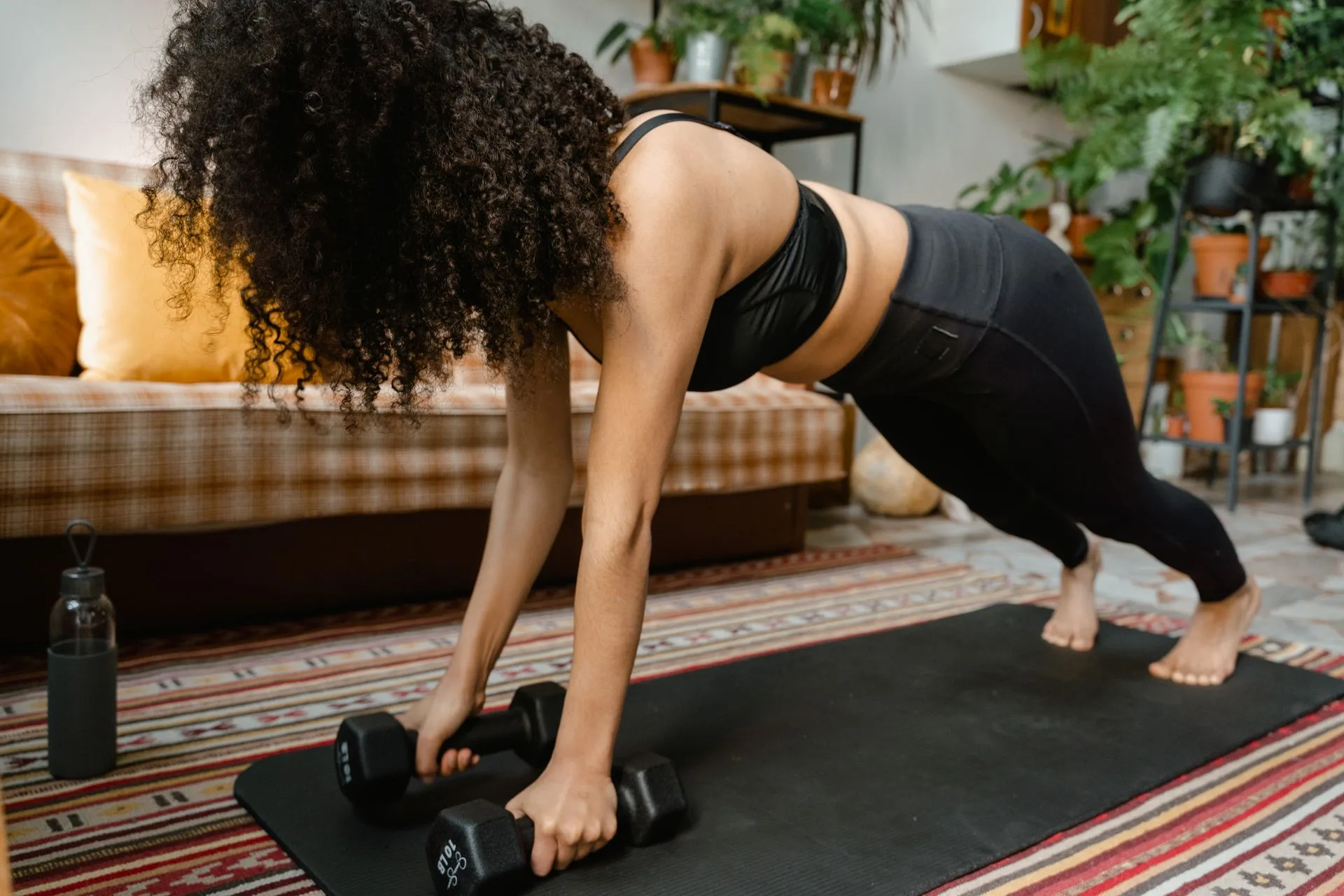
Do planks burn belly fat? Not directly. A plank burns only about 3 to 5 calories a minute, and you can’t burn fat from your stomach by working the muscles underneath it. Belly fat comes off when you lose fat overall, through a calorie deficit and plenty of movement. What planks do is build a stronger deep core, which improves posture and makes your stomach sit flatter as the fat comes off. They’re a useful part of a fat-loss plan, just not the part that burns the fat.
Below: how many calories a plank actually burns (with numbers for your body weight), what the research says about spot reduction, what planks do change, and how to fit them into a plan that does shrink your waist.
How Many Calories Does a Plank Burn?
The 2024 Adult Compendium of Physical Activities, the standard reference for the energy cost of exercise, lists planks under light calisthenics at 2.8 METs [1]. A MET is a multiple of your resting energy use, so a plank burns a bit under three times what you’d burn sitting still. For comparison, walking at a moderate 2.8 to 3.4 mph is 3.8 METs, and brisk walking at 3.5 to 3.9 mph is 4.8 METs.
Converted to calories (calories per minute = METs × 3.5 × body weight in kg ÷ 200):
| Body weight | 1-minute plank | 5 minutes of planks | 30-minute moderate walk |
|---|---|---|---|
| 60 kg (132 lb) | 3 cal | 15 cal | 120 cal |
| 70 kg (154 lb) | 3.4 cal | 17 cal | 140 cal |
| 80 kg (176 lb) | 3.9 cal | 20 cal | 160 cal |
| 90 kg (198 lb) | 4.4 cal | 22 cal | 180 cal |
| 100 kg (220 lb) | 4.9 cal | 25 cal | 200 cal |
These are total calories, including the roughly one MET you’d burn anyway at rest, so the extra burn from planking is even lower: about 2 to 3 calories a minute. Even a hard 5-minute plank session burns less than a small apple. A single 30-minute walk burns about as much as 40 minutes of planks.
The point isn’t that planks are useless. It’s that they’re a strength exercise, not a calorie-burning one, and that matters for what you can expect from them.
See what your walks burn
Enter your weight, pace and time to see the calories you burn walking, the easiest way to add to your daily burn.
Calculate calories burned walking →Why Planks Can’t Burn Fat From Your Stomach
The idea that working a muscle burns the fat on top of it is called spot reduction. It’s been tested directly, and it doesn’t hold up.
In a 2011 trial, 24 sedentary adults were split into two groups. One did seven abdominal exercises, two sets of 10 reps, five days a week for six weeks; the other did nothing extra. Everyone kept eating the same amount. The ab group got much stronger: they could do far more curl-ups at the end. But there was no significant change in their body weight, body fat percentage, belly fat, waist circumference or abdominal skinfolds [2].
Fat is stored and released from all over your body according to your hormones and genetics, not according to which muscle is working. When you’re in a calorie deficit, your body draws on fat everywhere, and many people find the lower belly is one of the last places to change.
What Planks Actually Do for Your Stomach
Planks don’t burn belly fat, but they do change how your midsection looks and works:
- They train your deep core. The transverse abdominis wraps around your trunk like a corset. A well-braced plank trains it to hold your abdominal contents in, so your stomach sits flatter when you stand. That’s a muscle and posture effect, not fat loss, but it’s visible.
- They improve posture. Planks train your trunk to resist sagging and arching. Better posture reduces the forward “pooch” that comes from an anteriorly tilted pelvis.
- They build abs you’ll see once fat comes off. Strong abdominal muscles show sooner as your body fat drops.
- They support the lifts that do burn calories. A strong brace makes squats, deadlifts and carries safer and heavier, and those big lifts cost far more energy and help you keep muscle while you lose fat.
If your stomach hangs or sags when you hold a plank, that’s usually gravity on soft tissue, not a sign the plank isn’t working. Here’s why your belly hangs when you plank and how to tell form problems from skin and fat.
What Actually Burns Belly Fat
Belly fat comes in two kinds, and both respond to the same things:
- Subcutaneous fat is the soft layer under your skin that you can pinch.
- Visceral fat sits deeper, around your organs. It’s the more harmful kind, and it responds well to exercise.
What works:
- A calorie deficit. Eating around 300 to 500 calories a day below maintenance is the main driver of fat loss everywhere, including your belly. Your TDEE tells you where maintenance is.
- Aerobic exercise. A meta-analysis of 15 studies (852 people) found that aerobic exercise reduced visceral fat in overweight adults even without a calorie-restricted diet, with moderate- or high-intensity aerobic training showing the most potential [3].
- Walking more. It’s the easiest way to raise your daily burn without making you hungrier or more tired. See how many steps a day to lose weight.
- Strength training two to three times a week. It keeps muscle while you lose fat, so more of the weight you lose is fat.
- Enough protein and sleep. Both make a deficit easier to stick to and help protect muscle.
If what you’re trying to shift is a fold of skin and fat that hangs over your lower belly, our guide to the apron belly covers what fat loss can change and what it can’t.
How to Use Planks in a Fat-Loss Plan
Treat planks as core strength work alongside the things that burn fat:
- Frequency: two to four times a week, at the end of a strength session or on its own.
- Volume: three to four holds. Stop each hold when your hips start to sag or your lower back arches, not when you collapse. For most people that’s 15 to 45 seconds at first.
- Progression: add about five seconds a hold as your form stays solid. Once you can hold good form for about a minute, make it harder rather than longer: elbows further forward, a long-lever plank, a plank with reach, or a side plank.
- Variety: mix in dead bugs, side planks and loaded carries so you train the whole trunk, not just the front.
Short, hard holds with good form train your core better than one long, sagging hold. Here’s more on how long an ab workout should be.
Will a 30-Day Plank Challenge Flatten Your Stomach?
A plank challenge will make you better at planking. Your hold time will go up, your core will get stronger, and your posture may improve. It won’t, on its own, burn a noticeable amount of belly fat: even five minutes of planking every day adds up to only about 500 calories over a whole month for a 70 kg person, roughly one meal’s worth.
If you do a plank challenge, pair it with a modest calorie deficit and daily walking. That combination will change your waistline; the planks will make sure there’s a stronger, flatter core underneath when it does.
Related Reading
Visceral Fat: What It Is, Why It Matters, and How to Lose It →Frequently Asked Questions
Do planks burn belly fat?
Not directly. A plank burns about 3 to 5 calories a minute, and you can’t burn fat from one area by training the muscles underneath it. Belly fat comes off with overall fat loss from a calorie deficit and more movement. Planks strengthen your deep core, which helps your stomach look flatter as the fat comes off.
How many calories does a 1-minute plank burn?
About 3 to 5 calories, depending on your body weight. The Compendium of Physical Activities rates planks at 2.8 METs, so a 70 kg (154 lb) person burns about 3.4 calories a minute. That’s only a little over half what the same person burns walking briskly.
Can planks give you a flat stomach?
They can help. Planks train the deep core muscles that hold your stomach in and improve posture, both of which make your midsection look flatter. But if there’s a layer of fat over your abs, it only shrinks with overall fat loss, so planks work best alongside a calorie deficit.
How long should I hold a plank to lose belly fat?
Hold time doesn’t change fat loss much, because planks burn few calories at any length. For core strength, do three or four holds of 15 to 60 seconds with good form, stopping when your hips sag. For belly fat, focus on your diet and daily walking.
Are planks better than crunches for belly fat?
Neither burns belly fat. Both train your abs, and planks also train your deep core and posture with less strain on your neck and spine. The best exercise for reducing belly fat is whichever activity helps you burn the most total calories consistently, such as walking, cycling or full-body strength training.
What exercise burns the most belly fat?
No exercise targets belly fat specifically. Aerobic exercise such as brisk walking, running or cycling reduces visceral belly fat even without dieting, and strength training helps you keep muscle while losing fat. Combined with a calorie deficit, these shrink belly fat faster than any ab exercise.
Sources: [1] Herrmann SD, et al. 2024 Adult Compendium of Physical Activities: A third update of the energy costs of human activities. J Sport Health Sci. 2024;13(1):6-12. [2] Vispute SS, et al. The effect of abdominal exercise on abdominal fat. J Strength Cond Res. 2011;25(9):2559-64. [3] Vissers D, et al. The effect of exercise on visceral adipose tissue in overweight adults: a systematic review and meta-analysis. PLoS One. 2013;8(2):e56415.