Last updated: October 2026
Visceral Fat: Why Abdominal Fat Is More Dangerous Than Total Body Fat
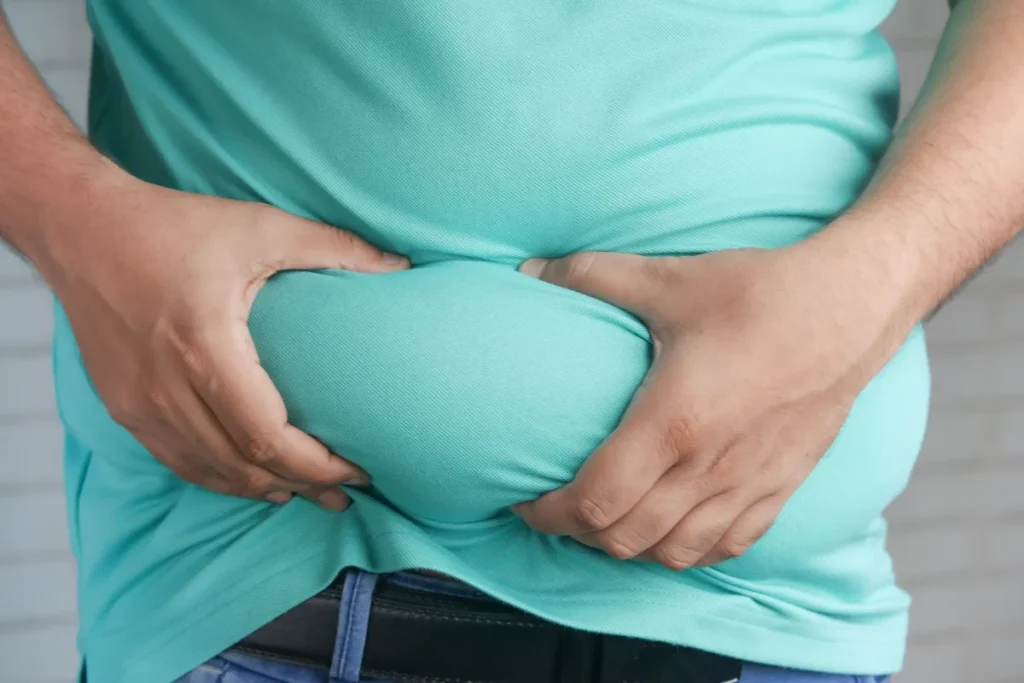
Visceral fat is the fat stored around your internal organs inside the abdomen — around your liver, kidneys, intestines, and heart. Unlike subcutaneous fat (the fat you can pinch under your skin), visceral fat is metabolically active, releases inflammatory compounds, and is directly linked to serious health conditions even when total body weight appears normal.
Calculate Your Body Fat Percentage
Visceral fat is approximately 10% of total body fat. Use our calculator to estimate your total body fat (visceral fat is roughly a tenth of it).
What Is Visceral Fat?
Your body fat is distributed in two main compartments:
- Subcutaneous fat: ~90% of total body fat — stored under the skin throughout the body. You can see it and pinch it. Present in the belly, hips, thighs, and arms.
- Visceral fat: ~10% of total body fat — stored deep inside the abdominal cavity, wrapping around internal organs including the liver, kidneys, intestines, pancreas, and mesentery.
Visceral fat is sometimes called “active fat” because it is metabolically active — it secretes hormones and inflammatory compounds that directly influence how your body functions. Having some visceral fat is normal and necessary (it cushions and protects internal organs). Having excess is a significant health risk.
A flat stomach does not mean you have low visceral fat. It’s possible to have a relatively thin appearance with high visceral fat — particularly in people who are sedentary and low in muscle mass (sometimes called “skinny fat”).
Why Visceral Fat Is More Dangerous Than Other Body Fat
Visceral fat cells (adipocytes) are more sensitive to hormones than subcutaneous fat cells, particularly cortisol and insulin. When these hormonal signals are disrupted — as in metabolic syndrome, diabetes, or chronic stress — visceral fat responds more aggressively, accumulating faster and releasing more inflammatory compounds.
Visceral fat produces proteins that:
- Inflame body tissues and organs
- Narrow blood vessels, raising blood pressure
- Disrupt insulin signaling, promoting insulin resistance
- Negatively affect liver, pancreatic, and kidney function
Health Risks of Excess Visceral Fat
| Condition | Association with High Visceral Fat (observational studies) |
|---|---|
| Heart disease | Women with highest waist-to-hip ratio 2× more likely to develop heart disease |
| Alzheimer’s / Dementia | People with most belly fat 3× higher risk of dementia |
| Colorectal cancer | People with most visceral fat 3× more likely to have precancerous colon polyps |
| Type 2 diabetes | Visceral fat strongly linked to insulin resistance; primary driver of T2D onset |
| Stroke | Higher visceral fat = higher stroke risk and earlier stroke age |
| High LDL cholesterol | Direct link between visceral fat and elevated “bad” cholesterol |
| Hypertension | Inflammatory compounds from visceral fat narrow vessels and raise blood pressure |
How to Measure Visceral Fat
There is no consumer-level direct measurement of visceral fat. Precise measurement requires CT scan or MRI — neither routinely ordered solely for this purpose. However, several accessible proxies provide useful estimates:
Waist circumference
The most practical indicator. Measure at the narrowest point of your waist (typically just above the belly button) with your stomach relaxed. All you need for this is a tape measure.
- Elevated risk: waist >40 inches (102 cm) in men; >35 inches (88 cm) in women
- Asian-specific thresholds (risk is higher at lower waist sizes): >35.5 inches (90 cm) in men; >31.5 inches (80 cm) in women
Waist-to-height ratio
Divide your waist circumference by your height (use the same unit for both). This is considered a stronger predictor of metabolic disease than BMI.
- Healthy: ratio ≤0.5 (your waist is no more than half your height)
- Elevated risk: ratio >0.5
Waist-to-hip ratio
Measure your waist at the narrowest point and your hips at the widest point. Divide waist by hip measurement.
- Elevated risk: >0.90 in men; >0.85 in women
Estimating from total body fat
Visceral fat is approximately 10% of total body fat. If you know your total body fat percentage, multiply it by 0.10 to estimate your visceral fat contribution. For example, a man at 25% body fat would carry roughly 2.5% of his body weight as visceral fat. This is only a rough estimate; waist measurements are a better practical guide.
What Causes Visceral Fat Accumulation
- Genetics: Partly determines where your body preferentially stores fat — “apple-shaped” bodies store more abdominally
- Dietary patterns: High intake of refined carbohydrates, added sugars, trans fats, and alcohol specifically promote visceral fat
- Physical inactivity: Exercise — particularly aerobic — directly reduces visceral fat
- Chronic stress: Chronically high cortisol (the stress hormone) is linked to more fat storage around the abdomen, so long-term stress may contribute to visceral fat
- Poor sleep: Sleep deprivation raises cortisol and ghrelin (hunger hormone), both of which promote visceral fat storage
- Menopause: Declining estrogen shifts fat distribution from hips and thighs to abdomen, increasing visceral fat accumulation
How to Reduce Visceral Fat
The good news: visceral fat is actually easier to lose than subcutaneous fat. It responds faster to lifestyle changes because it’s more metabolically active. Consistent changes typically produce measurable visceral fat reduction within 2–3 months.
Aerobic exercise (most effective)
Aerobic exercise specifically targets visceral fat. Research shows that aerobic exercise reduces waist circumference and visceral fat even when total body weight doesn’t change dramatically. Aim for at least 30 minutes per day, 5 days per week — moderate intensity (brisk walking, cycling, swimming) consistently reduces visceral fat. Vigorous exercise and HIIT show even faster results.
Dietary approach
- Reduce refined sugar, particularly fructose and sugar-sweetened beverages
- Eliminate trans fats (partially hydrogenated oils)
- Mediterranean diet pattern — olive oil, vegetables, lean protein, whole grains — has strong evidence for visceral fat reduction
- Adequate calcium and vitamin D intake linked to lower visceral fat in multiple studies
- Limit alcohol — promotes visceral fat storage
Sleep
7–9 hours of quality sleep per night. Sleep deprivation raises cortisol and promotes visceral fat. This is non-negotiable for visceral fat reduction.
Stress management
Chronic stress chronically elevates cortisol → directly drives visceral fat accumulation. Regular exercise, yoga, meditation, and social connection all measurably lower cortisol.
Intermittent fasting
Some evidence suggests intermittent fasting (time-restricted eating) may help reduce visceral fat. Results are comparable to standard calorie restriction when total calories are equal.
Related Reading
Frequently Asked Questions
Can you have high visceral fat with a flat stomach?
Yes. Visceral fat is deep inside the abdomen — it doesn’t always visibly protrude. People with low muscle mass and relatively low subcutaneous fat can have high visceral fat without obvious belly appearance. Waist circumference measurement is more reliable than visual assessment for estimating visceral fat risk.
Is visceral fat the same as belly fat?
No — belly fat has two components. Subcutaneous belly fat is directly under the skin (you can pinch it). Visceral fat is deeper, beneath the abdominal muscles, wrapped around organs. You can have both types simultaneously. Visceral fat is the more health-relevant type, though both can be reduced with the same lifestyle interventions.
How quickly can visceral fat be reduced?
Visceral fat responds faster than subcutaneous fat to lifestyle changes. With consistent aerobic exercise and dietary changes, meaningful reductions in visceral fat (reflected in reduced waist circumference) typically appear within 6–8 weeks. Full resolution of elevated visceral fat levels typically requires 3–6 months of consistent effort.
Related Reading
Related Reading
Body Fat Percentage by Age: How Composition Changes Over Time →
Estimate Your Body Fat and Visceral Fat Risk
Our body fat calculator estimates total body fat percentage, from which visceral fat (~10%) can be approximated alongside waist circumference risk assessment.