Last updated: August 2026
Training to failure means doing an exercise until you physically cannot complete another repetition, no matter how hard you try. It sounds simple, but the actual research on whether you should train this way — and how often — is more nuanced than most gym advice lets on, and the answer genuinely depends on whether you’re chasing muscle size or raw strength.
What Does Training to Failure Actually Mean?
There are two distinct kinds of failure, and the difference matters. Technical failure is the point where you can no longer complete a rep with proper form — your knees cave, your back rounds, your elbows flare. Muscular failure (also called absolute failure) is the point where the muscle simply cannot produce enough force to move the weight at all, regardless of form.
Most well-designed training programs mean technical failure when they say “train to failure” — stop when good form breaks down, not when you’re literally pinned under the bar. Pushing past technical failure into sloppy reps doesn’t add much benefit and meaningfully raises your injury risk.
Reps in Reserve: The Practical Way to Track How Close You Are
Rather than thinking in binary terms — failure or not — most coaches now use a scale called reps in reserve (RIR). An RIR of 3 means you stopped a set with three more reps left in the tank. An RIR of 0 means you couldn’t have completed another rep if you tried. Training to failure is simply training at 0 RIR.
RIR is closely related to RPE (rate of perceived exertion), which is the same idea expressed on a 1–10 effort scale instead. If you’re not familiar with how to estimate it, our guide to calculating RPE walks through it step by step — it’s a skill that takes some practice, since research shows most lifters underestimate how many reps they actually have left.
Not sure whether to program by RIR or by RPE? Our RIR vs RPE comparison breaks down when each scale works best.
What the Research Actually Shows
This is where the topic gets genuinely interesting, because the science has shifted over the past few years. Earlier systematic reviews, including a 2021 analysis in the Journal of Strength and Conditioning Research and a separate 2022 review in the Journal of Sport and Health Science, found little to no clear difference in muscle growth or strength between training to failure and stopping a few reps short.12
A larger 2024 meta-analysis in Sports Medicine, however, dug deeper by treating proximity to failure as a continuous scale (measured in RIR) rather than a simple yes/no comparison, pooling data across dozens of studies. The findings split cleanly along one line: for strength gains, how close you trained to failure made no meaningful difference — the confidence intervals for the effect included zero. For muscle growth, though, the relationship was clear and consistent: the closer a set was taken to failure, the more hypertrophy resulted.3
In plain terms: if you’re training purely for strength, the weight on the bar matters far more than whether you stop at 3 reps in reserve or 0. If you’re training for size, pushing closer to failure does seem to earn you more muscle — though the exact numerical relationship is still being worked out, and the researchers themselves caution against treating any specific RIR number as a hard rule.
Training to Failure for Muscle Growth vs. Strength
| Goal | Recommended proximity to failure | Why |
|---|---|---|
| Muscle growth (hypertrophy) | 0–3 RIR most sets, occasionally to failure | Growth increases the closer sets are taken to failure |
| Strength / powerlifting | 2–4 RIR on main lifts | Proximity to failure doesn’t meaningfully affect strength; heavier loads over time do |
| Accessory / isolation work | 0–2 RIR | Lower injury risk exercises where pushing closer to failure is safer |
| Beginners | 2–4 RIR | Technique isn’t reliable enough yet to safely judge true failure |
Not sure how close to failure you actually are?
Convert your perceived effort into a concrete RPE score to track your training more precisely.
Is Training to Failure Safe?
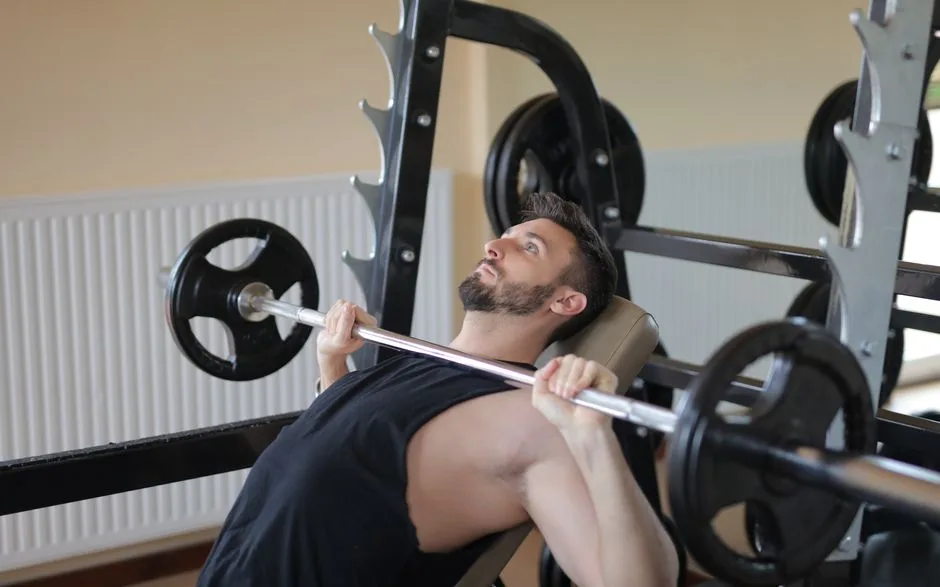
It depends heavily on the exercise. Failing on a machine, a cable exercise, or a dumbbell movement like a curl or lateral raise is low-risk — worst case, you set the weight down. Failing on a heavy barbell back squat or bench press without a spotter or safety pins is genuinely dangerous, since you can get pinned under the weight with nowhere to go. If you’re deciding which implement to use for a given lift, our barbell vs. dumbbell training breakdown covers exactly this kind of tradeoff.
As a rule: save true failure for exercises where failing is safe (isolation work, machines, dumbbells you can drop), and stay a couple of reps short of failure on heavy barbell compound lifts unless you have a spotter or properly set safety pins.
How Often Should You Train to Failure?
Training to failure is more fatiguing than submaximal training — it increases muscle damage, perceived fatigue, and recovery time, and doing it on every set of every session raises your risk of overtraining. Most research and coaching practice points to reserving true failure for the last set of an exercise, or the last one to three exercises of a session, rather than every set from the start.
A practical approach: stay a few reps shy of failure on your first sets and earlier exercises when you’re fresh, and let yourself get progressively closer to failure as the workout goes on. This gets you most of the hypertrophy benefit without accumulating fatigue that compromises the rest of your session — or your recovery going into the next one.
Training Beyond Failure
Some techniques let you extend a set past the point of failure: drop sets (reduce the weight and keep going once you fail), partial reps (continue with a shortened range of motion once full-range reps aren’t possible), and myo-reps (brief rest-pauses that let you squeeze out a few more reps). Research on these techniques generally shows they can modestly boost muscle growth for the exercises where they’re practical — but none of them are necessary, and all of them add fatigue. They’re tools for advanced lifters looking to push a specific stubborn muscle group, not something beginners need to worry about.
Related Reading
Related Reading
Related Reading
Related Reading
FAQ
Is training to failure necessary for muscle growth?
No, but it helps. Research shows you can build significant muscle while staying a few reps short of failure, and the closer to failure you train, the more growth you tend to see. It’s a dial to turn, not an on/off switch — you don’t need every set to be a true failure set to make progress.
Is training to failure good or bad?
Neither inherently — it depends on your goal and how you use it. For muscle growth, training close to failure on some sets is genuinely beneficial. For pure strength, it’s not necessary and adds fatigue without a clear payoff. Overusing it across every set of every session raises injury and overtraining risk.
Does training to failure build more muscle than stopping short?
On average, yes — a 2024 meta-analysis found muscle growth increased the closer sets were taken to failure. The effect is real but the exact numbers are still being refined, and earlier research found smaller or unclear differences, so treat this as a general trend rather than a precise formula.
How many sets should you train to failure?
Most guidance suggests reserving true failure for the last set of an exercise, or the last one to three exercises of a workout — not every set from the start. This captures most of the hypertrophy benefit while limiting the fatigue and injury risk that comes with training to failure constantly.
Training to failure isn’t a requirement for progress, and it isn’t something to avoid either — it’s a tool that matters more for muscle size than for strength, and one that’s safest saved for exercises and moments where failing doesn’t put you at risk. Used deliberately instead of on every set, it can be a genuinely useful part of a training program.
Sources:
1. Vieira AF, Umpierre D, Teodoro JL, et al. Effects of Resistance Training Performed to Failure or Not to Failure on Muscle Strength, Hypertrophy, and Power Output: A Systematic Review With Meta-Analysis. J Strength Cond Res. 2021;35(4):1165-1175. PMID: 33555822
2. Grgic J, Schoenfeld BJ, Orazem J, Sabol F. Effects of resistance training performed to repetition failure or non-failure on muscular strength and hypertrophy: A systematic review and meta-analysis. J Sport Health Sci. 2022;11(2):202-211. PMID: 33497853
3. Robinson ZP, Pelland JC, Remmert JF, et al. Exploring the Dose-Response Relationship Between Estimated Resistance Training Proximity to Failure, Strength Gain, and Muscle Hypertrophy: A Series of Meta-Regressions. Sports Med. 2024;54(9):2209-2231. PMID: 38970765