Last updated: October 2026
Compound vs. isolation exercises: every workout move you do falls into one of these two categories, and the distinction sounds academic until you realize it directly shapes how you should structure a session. The honest answer to “which is better” is neither, because they’re built to do different jobs.
What’s the Difference Between Compound and Isolation Exercises?
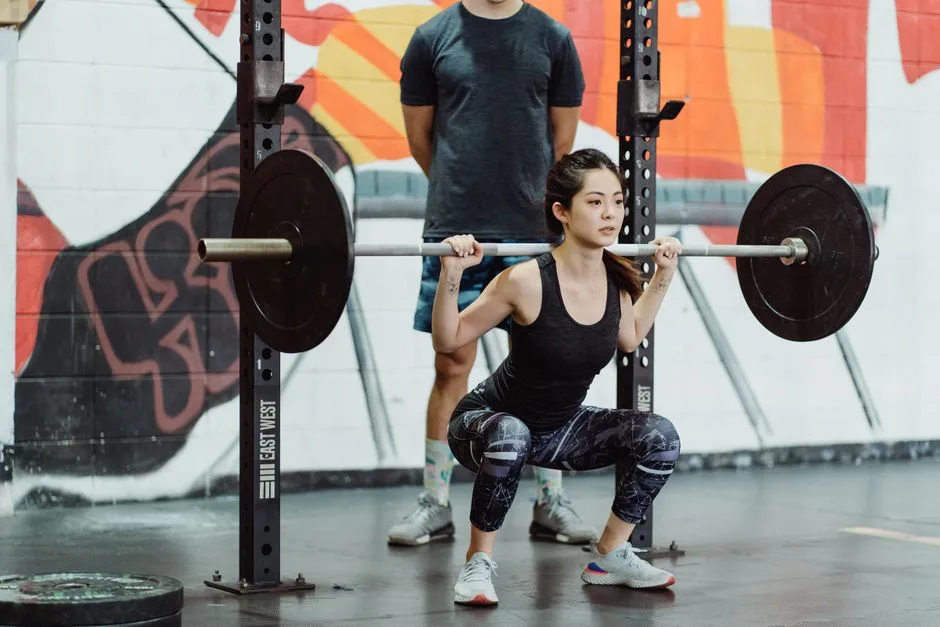
A compound exercise moves more than one joint at once and trains several muscles in the same rep. A squat moves your ankles, knees, and hips together, working your quads, glutes, hamstrings, and core all in one movement. An isolation exercise moves a single joint and targets one muscle specifically — a leg extension only moves the knee and works almost exclusively the quads.
Common compound exercises: squat, deadlift, bench press, overhead press, pull-up, barbell row, lunge.
Related Reading
Common isolation exercises: bicep curl, tricep extension, leg extension, leg curl, lateral raise, calf raise.
The Benefits of Compound Exercises
- Time efficiency — training several muscles per set means fewer total exercises needed to cover a full workout
- Heavier loads, more strength — recruiting multiple muscle groups lets you handle more weight than any single muscle could move alone, which drives faster strength gains
- Functional carryover — compound movements mimic real-world actions like lifting, pushing, and carrying, so the strength you build transfers directly to daily life
- Higher calorie burn per set — more total muscle mass working means more energy demand for the same amount of exercise
The Benefits of Isolation Exercises
- Targets muscles compound lifts undertrain — side delts, calves, biceps, and triceps often need direct work since compound lifts don’t stress them maximally
- Corrects imbalances — if one side or one muscle is lagging, isolation lets you address it specifically instead of hoping a compound lift fixes it indirectly
- Lower fatigue and joint stress — lighter loads and simpler movement patterns place less systemic and joint demand than a heavy compound lift
- Useful for rehab and around injuries — if a compound lift is off-limits due to pain or injury, isolation exercises let you keep training the same muscles at a safer, more controlled load
Why Neither Is Universally “Better”
The actual research on this is more specific than most gym debates suggest. A muscle only grows meaningfully from a set when it’s the true limiting factor of that set — the muscle that gives out first, not a secondary muscle helping out or your cardiovascular system. This is why a study comparing single-arm dumbbell curls against single-arm dumbbell rows found curls built more bicep size than rows [1], even though rows also work the biceps: in a row, the back muscles are the limiting factor, so the biceps never get maximally stressed.
A 6-month study on trained women compared compound-only, isolation-only and combined programs [2]. The compound-only and combined groups built more quad, glute and chest muscle than the isolation-only group, while the isolation group made bigger gains in leg-curl strength. The takeaway: compound lifts did most of the heavy lifting for overall muscle, and isolation work filled specific gaps.
There’s also a regional wrinkle worth knowing: some exercises don’t train every part of a muscle equally. The quadriceps has four muscles, and one of them (the rectus femoris) crosses the hip joint in addition to the knee. A squat challenges the other three quad muscles hard but doesn’t maximally stress the rectus femoris, because the hip and knee are moving in opposing directions during the lift. A leg extension, where only the knee moves, trains that muscle more directly. This is a real, evidence-backed reason isolation work still matters even if you’re already doing compound lifts for the same muscle group.
How to Balance Compound and Isolation in Your Workouts
For most lifters, roughly 60–70% of total training volume in compound movements and 30–40% in isolation work is a reasonable split. In practice, that looks like 3–4 compound exercises followed by 2–3 isolation exercises per session — enough to build a strong foundation while still directly addressing muscles that compound lifts leave undertrained.
Order matters more than most people think: do compound exercises first, while you’re freshest and can still handle the coordination and heavier loads they require. Save isolation work for after — you’re not sacrificing much by doing it fatigued, since it demands less technical precision and less weight.
Know how much volume you’re actually doing
Balancing compound and isolation work starts with knowing your current weekly training volume per muscle group.
Should Beginners Start With Compound or Isolation?
Physiologically, compound exercises should come first — they teach the fundamental movement patterns (squatting, hinging, pushing, pulling) that everything else in a training program builds on, and they give you the most return for the time you put in. Most beginner programs are weighted 80–90% toward compound lifts for exactly this reason.
That said, there’s a real exception worth acknowledging: if a compound lift like a barbell squat or deadlift feels genuinely intimidating, starting with a few simpler isolation exercises to build initial comfort and confidence in a gym setting isn’t the wrong move — it just shouldn’t become the whole plan. The goal is to work toward compound movements once you’re ready, not to avoid them indefinitely.
Related Reading
FAQ
Is it better to do compound exercises or isolation exercises?
Neither is better across the board — it depends on the muscle and the goal. Compound exercises build more total muscle and strength per set and should form the foundation of most programs. Isolation exercises are better for targeting a specific muscle to its limit, correcting imbalances, or training muscles compound lifts don’t fully stress. Most effective programs use both.
Is it okay to mix compound and isolation exercises in the same workout?
Yes — this is actually the standard, recommended approach, not an exception. A typical session does compound exercises first, then finishes with isolation work targeting muscles that need extra attention.
What are the 7 compound exercises?
There’s no single official list, but the most commonly cited “big” compound exercises are the squat, deadlift, bench press, overhead press, barbell row, pull-up, and lunge. Together they cover every fundamental movement pattern: squatting, hinging, horizontal and vertical pushing, horizontal and vertical pulling, and single-leg work.
Can you build muscle with only compound exercises?
Yes, to a real extent — research shows compound-only training builds significant muscle, particularly in the legs and back. But muscles like the biceps, triceps, side delts, and calves tend to grow more with some direct isolation work added, since compound lifts don’t always push them to their true limit.
Compound and isolation exercises aren’t competing philosophies — they’re two tools that solve different problems. Build your program around compound lifts, then use isolation work to fill in whatever they leave undertrained.
Sources: [1] Mannarino P, et al. Single-joint exercise results in higher hypertrophy of elbow flexors than multijoint exercise. J Strength Cond Res. 2021. [2] Barbalho M, et al. The effects of resistance exercise selection on muscle size and strength in trained women. Int J Sports Med. 2021.