Standard and Olympic weight plates look similar at a glance, but they’re not interchangeable. The difference in center hole size means one won’t fit on the other’s barbell — and buying the wrong type locks you into incompatible equipment. Here’s how to tell them apart and which one to buy.
The Key Difference: Center Hole Size
The center hole is what defines the two types:
- Standard plates: 25 mm (approximately 1 inch) center hole
- Olympic plates: 50 mm (approximately 2 inches) center hole
This single difference determines compatibility. Standard plates will not fit on an Olympic barbell — the shaft is too thick for the hole. Olympic plates can technically slide onto a standard bar (the hole is oversized), but you’d need an adapter sleeve to get a snug, safe fit.
Plate Diameter
The outer diameter also differs. Olympic plates follow an international standard: a 45 lb (20 kg) plate has a diameter of 450 mm (17.7 inches). Competition rules set 450 mm as the maximum plate diameter, which fixes the bar’s height off the floor for deadlifts and Olympic pulls.
Standard 45 lb plates are usually smaller in diameter (the exact size varies by brand). This lower bar height changes the starting position for deadlifts and is incompatible with competitive Olympic or powerlifting rules.
Barbell Compatibility
The type of barbell determines which plates you need:
Standard barbells are typically shorter (5–6 feet), lighter (often 15–25 lbs), and have a thinner shaft — about 1 inch in diameter throughout. They’re entry-level bars sold at budget retailers and are not compatible with Olympic plates without an adapter.
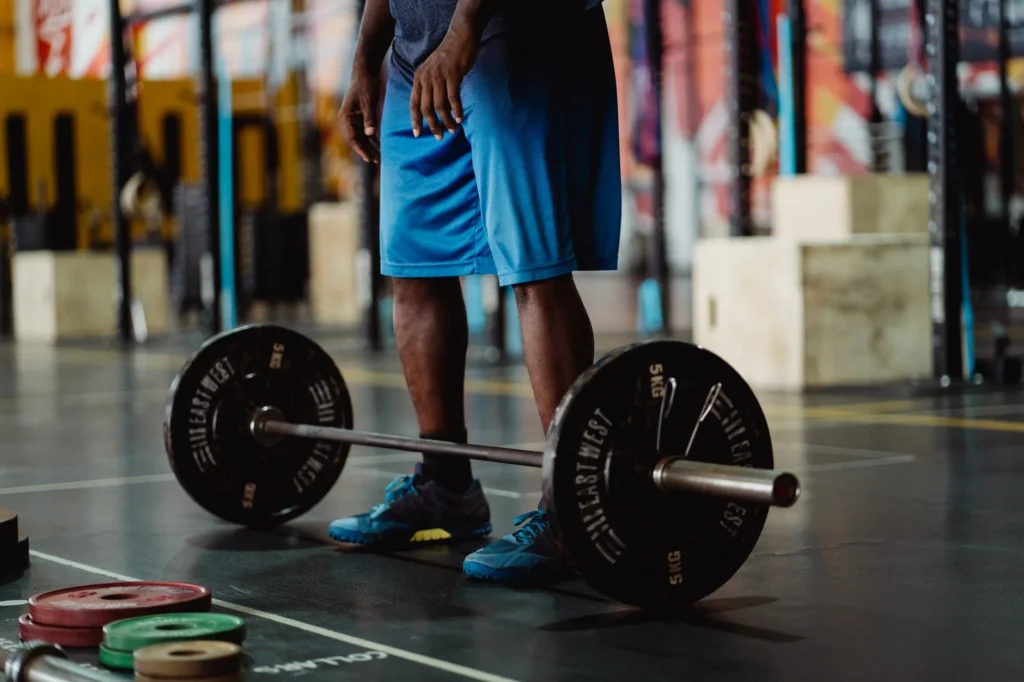
Olympic barbells are the gym standard: 7 feet long, 44–45 lbs, with a 2-inch diameter sleeve specifically designed for Olympic plates. They’re used in all serious strength training and competitive powerlifting and weightlifting. The sleeves spin independently from the shaft (via bearings or bushings), which reduces torque on the wrists during Olympic lifts.
If you already own a bar, check the sleeve diameter before buying plates. Most bars sold at sporting goods stores are Olympic bars — if the sleeve is 2 inches, you need Olympic plates.
Head-to-Head Comparison
| Feature | Standard Plates | Olympic Plates |
|---|---|---|
| Center hole diameter | 25 mm (~1 inch) | 50 mm (~2 inches) |
| 45 lb plate diameter | Usually smaller (varies by brand) | 450 mm (17.7 in) |
| Compatible barbell | Standard bar (1-inch shaft) | Olympic bar (2-inch sleeve) |
| Max plate weight typically available | 45 lbs | 100+ lbs |
| Cost | Lower | Higher |
| Competition use | No | Yes |
| Available as bumper plates | No | Yes |
Weight Availability
Standard plates typically max out at 45 lbs per plate. Olympic plates are available in heavier increments — 55, 65, 100 lbs — which matters for elite lifters who need more weight per sleeve without stacking a dozen plates. Olympic plates are also available as bumper plates, calibrated competition plates, and urethane-coated plates. Standard plates are only available in basic cast iron or rubber-coated iron.
Can You Use Olympic Plates on a Standard Bar?
Technically yes, with an adapter sleeve (a hollow tube that fills the gap between the 1-inch shaft and the 2-inch hole). In practice this is an awkward workaround, adds cost, and the fit is never as secure as plates designed for the bar. It’s not recommended for regular use.
Can you use standard plates on an Olympic bar? No. The 1-inch hole won’t clear the 2-inch sleeve. Standard plates simply won’t load onto an Olympic bar.
Which Should You Buy?
For anyone training seriously — squats, deadlifts, bench press, any barbell program — buy Olympic plates and an Olympic barbell. The standardized diameter, heavier weight availability, bumper plate options, and competition compatibility make it the clear long-term choice. Olympic weight plates are worth buying once and never having to replace when your training gets more serious.
Standard plates and bars are a reasonable entry point for beginners on a tight budget who are doing light to moderate training and aren’t planning to compete. But if you ever upgrade to an Olympic bar, your standard plates become incompatible — so most people are better off starting with Olympic from the beginning.
Find Out Exactly How Much Your Plates Weigh
Use the plate weight calculator to check the exact weight of any plate size or combination.
Use the Plate Weight Calculator →Related Reading
Types of Weight Plates: Every Plate Style Explained →Related Reading
How Much Does a Barbell Weigh? Every Bar Type Explained →Related Reading
Fractional Weight Plates: What They Are and When to Use Them →Related Reading
Weight Plates for a Home Gym: What to Buy and in What Order →