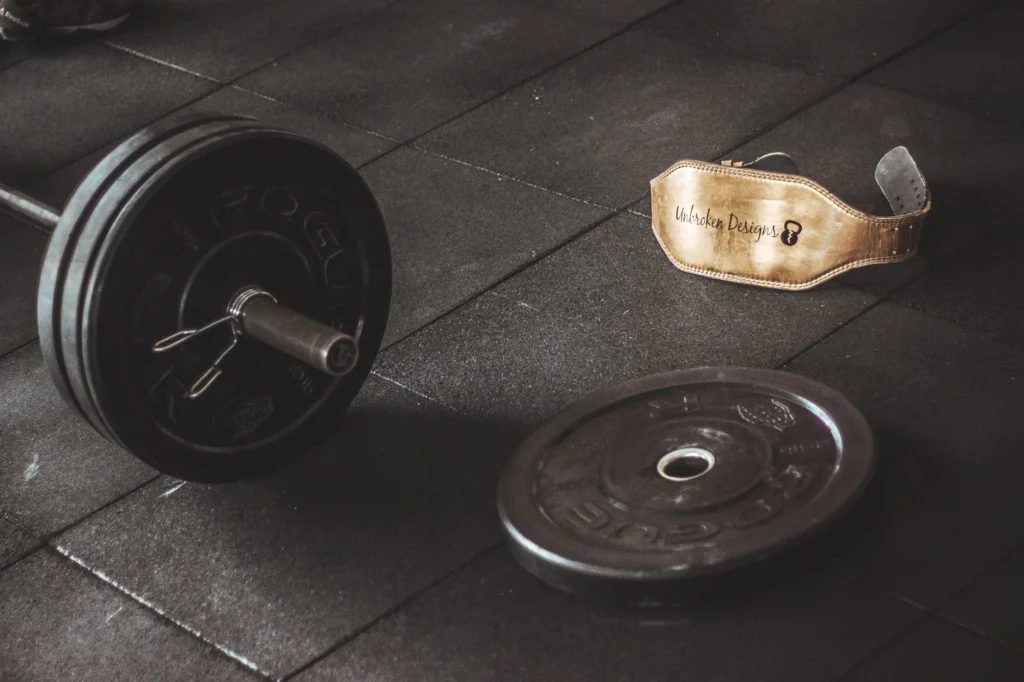
Bumper plates and iron plates are both round discs that load onto a barbell — but they’re built for different purposes, behave differently when dropped, and aren’t interchangeable in every situation. Choosing the right type affects noise levels, floor protection, how much weight fits on the bar, and whether you can safely drop the bar from overhead.
The Core Difference
Bumper plates are made of dense rubber (or urethane) with a steel center ring. Their defining feature is that every bumper plate — regardless of weight — has the same outer diameter: 450 mm (17.7 inches). A 10 lb bumper plate is the same size as a 45 lb bumper plate. They’re designed to be dropped from overhead without damaging the floor, the barbell, or the plates.
Iron plates are cast iron or steel. Their outer diameter decreases with weight — a 10 lb iron plate is much smaller than a 45 lb iron plate. Iron is denser than rubber, so iron plates are thinner per pound of weight, which means more iron plates fit on the same barbell sleeve. They’re not designed to be dropped.
Side-by-Side Comparison
| Feature | Bumper Plates | Iron Plates |
|---|---|---|
| Material | Rubber or urethane with steel core | Cast iron or steel |
| Can be dropped | Yes | No |
| Noise | Quiet | Loud |
| Floor protection | Good | Poor — can crack or dent surfaces |
| Outer diameter | Uniform (450 mm) regardless of weight | Varies — lighter plates are smaller |
| Thickness per pound | Thicker | Thinner |
| Plates per sleeve | Fewer at very heavy loads | More |
| Cost per pound | Higher | Lower |
| Rust resistance | High — rubber doesn’t rust | Low unless rubber-coated or treated |
Who Should Use Bumper Plates
Olympic weightlifters and CrossFitters: Any lift that requires dropping the barbell — cleans, snatches, power cleans — requires bumper plates. Rubber absorbs the impact when the bar hits the floor. Iron plates would damage the bar, the floor, and the plates themselves on repeated drops.
Home gym owners: Even if you never do Olympic lifts, bumpers are the practical choice for a home gym. Dropping iron plates on a garage floor is a fast way to crack plates, dent concrete, and wake up neighbors. Bumpers absorb impact and significantly reduce noise. They’re also rust-resistant, which matters in an unheated garage or humid environment.
Beginners: New lifters haven’t yet built the bar control to guarantee they’ll never lose grip on a heavy set. Bumpers provide a safety margin. They also ensure consistent bar height off the floor for deadlifts — since all bumpers share the same 450 mm diameter — which keeps mechanics consistent regardless of weight used.
Who Should Use Iron Plates
Powerlifters: Powerlifting doesn’t involve dropping the bar. Every rep uses a rack or controlled lowering. Iron plates are thinner, so more fit on the sleeve — important when training at 500+ lbs. Competition powerlifting uses calibrated iron or steel plates, not bumpers.
Bodybuilders and general strength athletes: Bench press, squat in a rack, shoulder press, rows — none of these require dropping the bar. Iron plates work perfectly for rack-based training and are significantly cheaper per pound than bumpers, which matters when accumulating a lot of total weight.
Types of Bumper Plates
Bumper plates aren’t all the same. The four main variants:
Training bumpers: Standard black rubber with a steel insert ring. The most common type in home gyms and CrossFit boxes. Durable and functional, with a moderate bounce when dropped.
Competition bumpers: Color-coded per IWF standards (red = 25 kg, blue = 20 kg, yellow = 15 kg, green = 10 kg) and calibrated to tight weight tolerances. Less bounce than training bumpers, which reduces the risk of the bar bouncing away after a drop.
Hi-temp bumpers: Made from recycled rubber. Extremely durable and suitable for outdoor use. Bounce varies by brand, so check reviews if a dead drop matters to you.
Crumb rubber bumpers: The softest and quietest option. Made from crumb-recycled rubber. Often among the quietest options, though bounce varies by brand. Ideal for home gyms where noise reduction is a priority.
Can You Mix Bumper Plates and Iron Plates?
For rack exercises where the bar never contacts the floor — bench press, squats in a rack, overhead press — you can load bumpers and iron on the same bar without issue.
For exercises where the bar contacts the floor — deadlifts, cleans, or any missed overhead rep — do not mix them. When a barbell drops with iron plates loaded alongside bumpers, full-size iron plates hit the floor directly, and smaller iron plates take the shock of the landing even if they don’t touch the floor. Either way the iron can clang, shift, and damage both the barbell sleeves and the plates. Iron is not designed to absorb that impact, and the metal-on-floor contact can chip or crack plates and damage your surface.
Which Should You Buy?
For a home gym, start with bumpers. They cost more per pound but protect your floor, reduce noise, and work for every type of training. If you eventually need to go very heavy on powerlifting movements and bumpers are taking up too much sleeve space, add iron plates for rack-only exercises.
For a commercial gym or dedicated powerlifting facility where noise and floor damage aren’t concerns, iron plates are more cost-effective at scale and allow heavier total loading per sleeve.
For most lifters, bumpers are the right default. Bumper plates are a reasonable place to start if you’re building a home setup from zero.
Find Out Exactly How Much Your Plates Weigh
Use the plate weight calculator to get exact weights for every plate combination — bumper or iron.
Use the Plate Weight Calculator →Related Reading
Types of Weight Plates: Every Plate Style Explained →Related Reading
Weight Plates for a Home Gym: What to Buy and in What Order →Related Reading
Standard vs Olympic Weight Plates: What’s the Difference? →Related Reading
Fractional Weight Plates: What They Are and When to Use Them →