The Short Answer — and Why It Matters
Last updated: March 2026
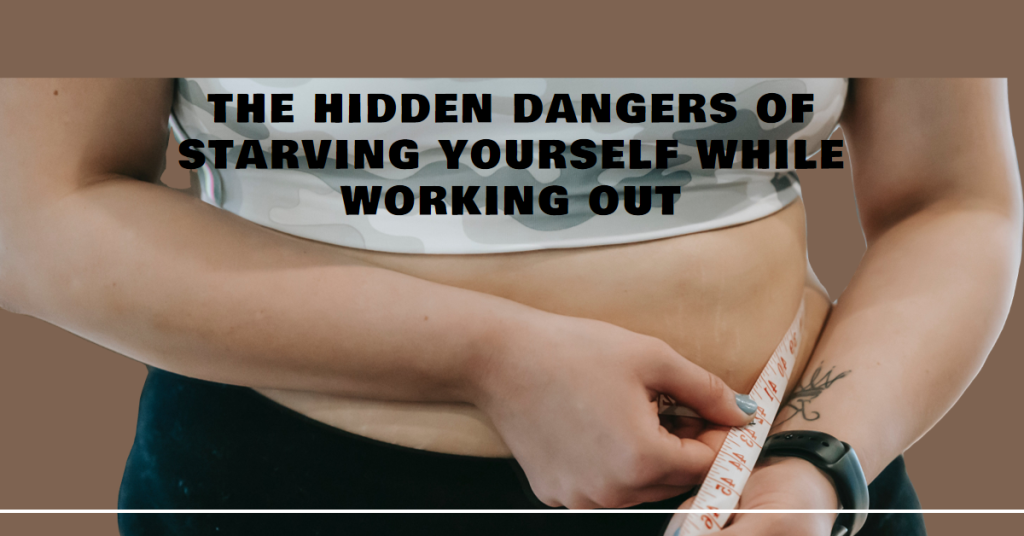
Starving yourself while working out does not accelerate fat loss. It does the opposite: it breaks down muscle tissue, slows your metabolism, and trains your body to conserve energy rather than burn it.
The reason this approach feels logical is understandable — if you eat less and move more, you should lose weight faster. The problem is that below a certain calorie threshold, your body stops treating exercise as a stimulus for adaptation and starts treating it as a threat to survival. The response is muscle breakdown, hormonal disruption, and a downregulated metabolism that makes fat loss harder, not easier.
This article covers exactly what happens physiologically, why the “starvation + exercise” approach backfires, and what the actual numbers look like for losing fat without losing muscle.
What Happens to Your Body When You Starve and Train
1. Muscle Breakdown — Not Fat Loss
When calorie intake drops too low, your body enters a catabolic state. It needs energy to function and to fuel your workout — and if dietary calories aren’t available, it turns to stored tissue. The priority is not fat. The priority is fast-access energy sources, which includes amino acids broken down from muscle protein.
The result: you lose muscle mass. The weight on the scale drops, but a significant portion of it is lean tissue — exactly the tissue that determines your long-term metabolic rate and your strength.
2. Metabolic Slowdown
Your metabolism is not a fixed rate. It adapts. When calorie intake drops significantly below your maintenance needs, your body reduces its energy expenditure to match — a process called adaptive thermogenesis. You burn fewer calories at rest. You produce less heat. Non-exercise activity (the small movements that make up a large portion of daily calorie burn) drops involuntarily.
This is why people who severely restrict calories often plateau quickly. The deficit that caused initial weight loss disappears as the body matches output to input.
3. Exercise Performance Collapses
Muscles run on glycogen — stored glucose derived from carbohydrates. Severe calorie restriction depletes glycogen stores. Without glycogen, training intensity drops. You can’t lift as heavy. You can’t recover between sets. You fatigue faster and risk injury because coordination and reaction time are also impaired by low blood glucose.
The workout that was supposed to accelerate your results becomes a session you’re barely surviving, producing minimal training stimulus and significant recovery debt.
4. Hormonal Disruption
Prolonged calorie restriction combined with training creates a hormonal stress response. Cortisol — the primary stress hormone — elevates and stays elevated. Elevated cortisol directly promotes muscle breakdown and fat storage, particularly around the abdomen. Testosterone and growth hormone — the hormones that drive muscle repair and fat mobilisation — decline. In women, reproductive hormones can be suppressed enough to cause menstrual disruption.
5. Immune Suppression and Nutrient Deficiency
Food provides more than calories. Vitamins, minerals, and essential fatty acids support immune function, bone density, neurological health, and cellular repair. Severe restriction depletes these stores. The immune system weakens. Recovery from training slows. Small injuries that would normally resolve quickly become persistent problems.
The Myth: Starvation Burns More Fat
The logic seems sound: no food → body burns fat for fuel → faster fat loss.
The reality: yes, your body does mobilise fat stores under calorie restriction. But it also mobilises muscle protein simultaneously. And as the metabolic slowdown takes hold, the rate of fat burning decreases anyway. You end up with a lower-calorie maintenance level, less muscle, and a body that is more efficient at storing fat — not less.
The research is consistent: combined calorie deficit and resistance training produces better body composition outcomes than severe restriction alone. The goal is not to eliminate calories. The goal is to create a moderate, sustainable deficit while giving your muscles a reason to stay.
What the Right Number Actually Looks Like
The sustainable approach to losing fat while training is a moderate calorie deficit — typically 300–500 calories below your Total Daily Energy Expenditure (TDEE). This is large enough to drive fat loss and small enough to protect muscle mass, preserve hormonal function, and fuel training performance.
TDEE is not the same for everyone. It depends on your weight, height, age, sex, and how much you move and train. Most people significantly underestimate how many calories they actually need — particularly those who train regularly.
Find your actual daily calorie target
Calculate your TDEE and see the exact calorie range that supports your training while driving fat loss — without starvation.
The Alternative: Body Recomposition
Body recomposition — simultaneously losing fat and building muscle — is achievable for most people who are new to training or returning after a break. It requires a calorie intake close to maintenance (not a severe deficit), adequate protein (1.6–2.2g per kg of bodyweight), and consistent progressive resistance training.
This approach is slower than crash dieting on the scale. But it produces a fundamentally different outcome: more muscle, less fat, a higher metabolic rate, and a body that keeps changing rather than adapting to starvation and plateauing.
Calculate your body recomposition targets
See your fat loss and muscle building targets side by side — and the nutrition numbers that make both happen at the same time.
Signs You’re Eating Too Little for Your Training Load
- Persistent fatigue that doesn’t improve with rest
- Strength declining across multiple sessions despite consistent training
- Difficulty sleeping despite being physically tired
- Mood changes — irritability, low motivation, difficulty concentrating
- Frequent illness or slow recovery from minor injuries
- Constant hunger that doesn’t resolve after eating
- Weight loss that includes visible muscle loss or increased softness in trained areas
These are signs of relative energy deficiency — your calorie intake is not sufficient for your training volume. The fix is not to eat less and push harder. The fix is to calculate your actual needs and close the gap.
Practical Guidelines for Fat Loss That Works
- Calorie deficit: 300–500 kcal below TDEE. No more. Larger deficits produce faster initial weight loss but trigger metabolic adaptation and muscle loss that reduce long-term results.
- Protein intake: 1.6–2.2g per kg of bodyweight per day. Higher protein intake during a deficit protects muscle mass and increases satiety.
- Training: Maintain resistance training during a cut. This is the signal that tells your body to preserve muscle. Reducing training load while cutting removes that signal.
- Rate of loss: 0.5–1% of bodyweight per week is a sustainable rate that minimises muscle loss. Faster than this consistently indicates the deficit is too aggressive.
- Diet breaks: Periods of eating at maintenance (1–2 weeks every 8–12 weeks) reduce adaptive thermogenesis and reset hormones affected by prolonged deficit.
FAQ
Do you burn fat if you starve yourself?
Yes — but you also burn muscle protein simultaneously, and your metabolic rate drops to compensate for the deficit. The net result is often less fat loss than a moderate deficit would produce, plus significant muscle loss that reduces your metabolism long-term.
Will I lose weight if I workout and don’t eat anything?
You will lose scale weight, but a significant portion will be water, glycogen, and muscle tissue — not fat. Exercise without fuel accelerates muscle breakdown and dramatically impairs performance and recovery.
How much should I eat if I’m working out to lose weight?
Start with your TDEE — the number of calories your body burns given your activity level — and subtract 300–500 calories. This is your daily target. Eating below this range consistently will impair training, slow metabolism, and cause muscle loss. Use the TDEE calculator above to find your specific number.
Do you lose muscle if you starve yourself?
Yes. When dietary protein is insufficient, your body breaks down muscle tissue to supply amino acids for energy and essential functions. This is accelerated by exercise that demands more energy than available calories can provide.
Is a workout wasted if you don’t eat enough?
Partially. A workout performed in a severely underfed state provides stimulus, but recovery is compromised by inadequate nutrients. Muscle protein synthesis — the process that makes training productive — requires dietary protein and calories to occur. Without them, the workout produces stimulus but minimal adaptation.