Last updated: October 2026
How to Set a Steps Per Day Goal That Actually Works
The most common mistake in setting a steps-per-day goal is choosing a number — usually 10,000 — that has no connection to your actual starting point. Pedometer research consistently shows that people increase their daily steps by approximately 2,000 when they use a specific goal and track it. But the research also shows that the goal needs to be approximately 10–20% above your current daily average to drive consistent behaviour change without triggering burnout. Starting from the population average of 4,000–5,000 steps, that means your first goal should be around 5,000–6,000 steps — not 10,000.
Get a Personalised Steps Per Day Goal
The steps-per-day calculator builds a recommendation around your age, current activity level, and health objective — giving you a specific target based on where you actually are, not a generic default.
Step 1: Know Your Baseline
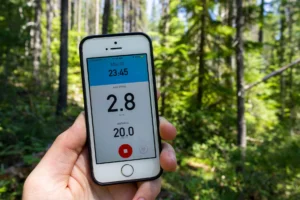
You cannot set a meaningful goal without a realistic baseline. Wear a pedometer or use your smartphone’s health app without changing any behaviour for 3–7 days. Average the daily totals. This is your baseline — the floor your goal needs to build from.
Common baselines by lifestyle type:
| Lifestyle | Typical Daily Baseline | Classification |
|---|---|---|
| Desk job, minimal movement outside work | 2,500–4,000 steps | Limited / sedentary |
| Office job with light walking, occasional errands | 4,000–6,000 steps | Low active |
| Active commute (walking or cycling), some daily walking | 6,000–8,000 steps | Somewhat active |
| Active job (teaching, healthcare, retail), regular exercise | 8,000–12,000 steps | Active |
| Physically demanding job plus exercise | 12,000+ | Highly active |
Step 2: Match Your Goal to Your Health Objective
Your steps-per-day goal should reflect what you are trying to achieve. The research provides clear thresholds for different objectives:
| Health Objective | Target Steps/Day | Rationale |
|---|---|---|
| Leave the sedentary zone | 5,000+ | Under 5,000 = sedentary; above 5,000 = meaningful break in risk profile |
| Reduce mortality risk (60+) | 6,000–8,000 | Meta-analysis optimal range for adults 60 and older |
| Reduce mortality risk (under 60) | 8,000–10,000 | Meta-analysis optimal range for adults under 60 |
| Meet CDC aerobic activity guidelines | 7,500–8,000 | Approximately equivalent to 150 min/week of moderate activity |
| Support weight loss | 8,000–10,000 | Higher calorie burn; 8,200+ steps associated with lower obesity rates |
| Highly active / athletic | 12,000–15,000 | Appropriate for people already consistently exceeding 10,000 steps |
Do not jump directly to the target for your objective if your baseline is far below it. A person averaging 3,500 steps who needs 8,000 for their health goal should not set 8,000 as their immediate target — they should set 5,000 first, hit that consistently, then move to 7,000, then 8,000.
Step 3: Set Your First Goal at Baseline + 1,000–1,500 Steps
A practical rule of thumb for sustainable step count progression is to aim 10–20% above your current average. In practice, this works out to roughly 500–1,500 additional steps depending on your starting point:
- Starting at 2,500–3,500 steps: Set first goal at 4,000. Add 250–500 steps every 1–2 weeks.
- Starting at 4,000–5,500 steps: Set first goal at 6,000. Add 500 steps every 1–2 weeks.
- Starting at 6,000–7,000 steps: Set first goal at 8,000. Add 500–1,000 steps per week.
- Starting at 8,000+ steps: Set first goal at 10,000. Add 1,000 steps every 2 weeks.
The rationale for gradual progression is twofold. First, behavioural: achieving early goals builds confidence and habit. Second, physiological: connective tissue (tendons, ligaments, plantar fascia) adapts more slowly than cardiovascular fitness, and jumping step counts too quickly is the most common cause of walking-related overuse injuries.
Step 4: Make the Goal Specific and Trackable
The evidence on goal-setting and behaviour change consistently shows that specific, measurable goals outperform vague intentions. “I will walk more” produces negligible change. “I will take 7,000 steps per day, tracked using my phone health app, reviewed every Sunday” produces sustained change.
Effective steps-per-day goal structure:
- Specific number: A defined daily target (e.g., 7,500 steps) — not a range, not “more than yesterday”
- Tracking method: Choose one: pedometer, smartphone app, smartwatch. Use the same device every day
- Review frequency: Weekly — not daily. Daily variation is normal and expected; weekly averages reveal the trend
- Upgrade trigger: Once you hit your goal on 5 out of 7 days for 2 consecutive weeks, increase the goal by 500–1,000 steps
Recommended Steps Per Day Goal by Age
| Age Group | Long-Term Target | Reasonable Starting Goal (if currently sedentary) |
|---|---|---|
| Under 18 | 12,000+ | 8,000–9,000 |
| 18–59 | 8,000–10,000 | 5,500–6,500 |
| 60–74 | 7,000–8,000 | 4,500–5,500 |
| 75+ | 6,000–7,000 | 3,500–4,500 |
Why Tracking Your Steps Makes the Goal Work
A systematic review of pedometer interventions found that participants using pedometers increased their daily steps by an average of 2,491 more than control groups, and having a step goal was a key predictor of that increase [1]. The combination of real-time feedback (seeing your current count) and a specific number to reach drives significantly more behaviour change than intention alone.
Practical tracking options:
- Smartphone health app (Apple Health, Google Fit): Accurate when your phone is on you; undercounts when you leave your phone behind
- Clip-on pedometer: Most accurate for waist position; inexpensive and reliable for step counting without distraction
- Smartwatch / fitness band: Convenient; accuracy varies by brand and wrist position, but consistently good for tracking relative change
If you don’t want to rely on your phone, a simple clip-on pedometer is inexpensive and removes the “left my phone in another room” gap entirely.
Whichever device you choose, consistency matters more than precision. Using the same device in the same way every day gives you meaningful comparative data even if the absolute count is off by 5–10%.
Calculate Your Starting Step Goal
Skip the guesswork. The steps-per-day calculator gives you a starting goal and a progression target based on your age, current average, and what you are working toward.
Sources: [1] Bravata DM, et al. Using pedometers to increase physical activity and improve health: a systematic review. JAMA. 2007.