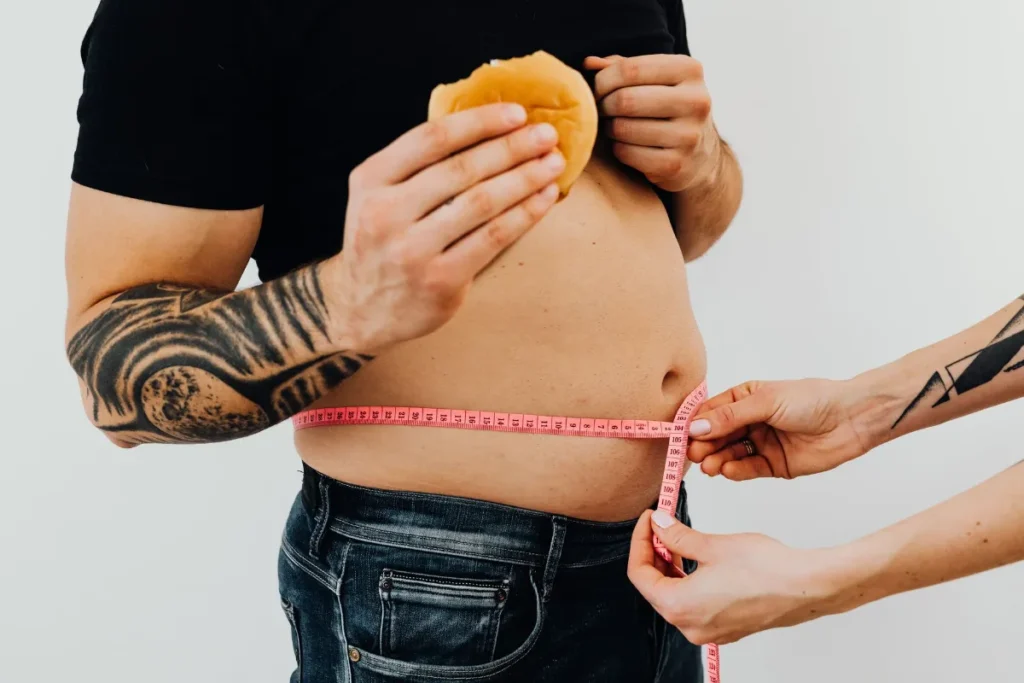
The honest answer: it depends on your starting weight, your eating window, what you eat during that window, and how consistently you follow the protocol. Intermittent fasting is not magic — it works by creating a calorie deficit through time restriction. But research shows it works reliably when done correctly.
Calculate Your Fasting Protocol for Weight Loss
Get a personalized eating window, daily calorie target, and protein breakdown based on your weight, activity level, and goal.
Use the IF Calculator →Realistic IF Weight Loss Expectations
Most people lose roughly 3–6 lbs (1.5–3 kg) per month (often more in the first few weeks, much of it water) on intermittent fasting when following the protocol consistently with appropriate calorie intake during the eating window. The wide range reflects differences in starting weight, activity level, and diet quality.
A simpler benchmark: a consistent IF deficit of 400–600 calories per day produces approximately 3.5–5 lbs of fat loss per month. That’s the realistic, sustainable rate for most people.
What the Research Says
A 2022 randomized controlled trial (139 participants, 12 months) compared time-restricted eating to daily calorie restriction. Both groups followed a calorie-restricted diet of 1,200–1,800 kcal/day. Results:
- Time-restricted eating group: −8.0 kg mean weight loss
- Calorie restriction only group: −6.3 kg mean weight loss
The difference was not statistically significant: adding time-restricted eating to calorie restriction did not produce meaningfully more weight loss than calorie restriction alone [1].
A 2022 review of intermittent fasting and metabolic health [2] found that intermittent fasting typically produces:
- Mild to moderate weight loss, largely by reducing overall energy intake
- Reductions in waist circumference and fat mass
- Improvements in some blood lipid and insulin measures in many studies
- Modest reductions in blood pressure in some trials
Anyone taking glucose-lowering medication should only fast under medical supervision.
How IF Methods Compare for Weight Loss
| Method | Fasting Structure | Typical Monthly Loss (approx.) | Difficulty |
|---|---|---|---|
| 16:8 | 16h fast / 8h eating window daily | 3–6 lbs | Beginner-friendly |
| 5:2 | 500–600 kcal on 2 days/week; normal eating 5 days | 4–8 lbs | Moderate |
| Alternate-Day | Zero or 20–25% calories every other day | 6–10 lbs | Demanding |
| OMAD | One meal per day (20:4 or 23:1) | 5–10 lbs | Demanding |
The most effective method is whichever one you’ll actually stick to for 3+ months. Research consistently shows that adherence matters more than protocol intensity — a sustainable 16:8 outperforms a poorly followed ADF schedule every time.
What Drives IF Weight Loss Results
Three factors determine how much weight you actually lose on IF:
1. Total calorie intake during the eating window
IF creates a time-restricted window but does not automatically create a calorie deficit. If you eat at or above maintenance during your window, you won’t lose weight. The eating window makes it easier to eat less — it doesn’t guarantee it.
2. Protein intake
Higher protein intake during the eating window preserves muscle mass during the deficit and increases satiety, naturally reducing total calorie consumption. Aim for 1.2–1.6g of protein per kg of body weight during your eating window.
3. Consistency over 4–6+ weeks
The body takes several weeks to adapt to a new fasting pattern. Most people don’t see consistent, measurable results until week 4–6. Abandoning the protocol after two weeks based on minimal scale change is the most common reason IF “doesn’t work.”
Calories on Fasting Days (5:2 Protocol)
On 5:2 fasting days, limit intake to 500–600 calories. Make those calories count by prioritizing:
- Lean protein (chicken breast, egg whites, fish, Greek yogurt) — most filling per calorie
- Non-starchy vegetables — high volume, very low calorie
- High-fiber options — legumes, leafy greens — slow digestion and extend satiety
Avoid processed carbs and high-fat foods on fasting days — they use up the calorie budget quickly without providing much satiety.
Frequently Asked Questions
Does IF work without calorie counting?
For some people, yes — the restricted eating window naturally limits intake enough to create a deficit passively. For others, it doesn’t — particularly those who eat calorie-dense foods quickly during their window. If you’re not seeing results after 6 weeks, tracking calories for 2–3 weeks helps identify whether your window intake is actually creating a deficit.
Is IF more effective than traditional calorie restriction?
Research suggests comparable results when total calories are similar — with the advantage of IF being that the time restriction makes the calorie reduction easier to maintain without actively counting. The 2022 trial cited above found no significant difference between TRE and standard calorie restriction when calories were matched — the main benefit of IF is that some people find it easier to stick to.
Does exercise improve IF weight loss?
Yes, significantly. Resistance training during IF preserves muscle mass and raises resting metabolic rate, producing more fat-specific weight loss versus scale weight loss alone. Exercise during or just after the eating window (when fuel is available) is preferable to training during the fasted state, particularly for high-intensity sessions.
Find Your IF Weight Loss Target
Our intermittent fasting calculator generates a personalized eating window, daily calorie target, and protein goal based on your weight, activity level, and goal.
Calculate My IF Protocol →Related Reading
Weight Loss Percentage Calculator: How to Track Your Progress →Related Reading
Water Fasting Calculator: How Much Weight Can You Lose? →Sources: [1] Liu D, et al. Calorie restriction with or without time-restricted eating in weight loss. N Engl J Med. 2022. [2] Vasim I, Majeed CN, DeBoer MD. Intermittent fasting and metabolic health. Nutrients. 2022.