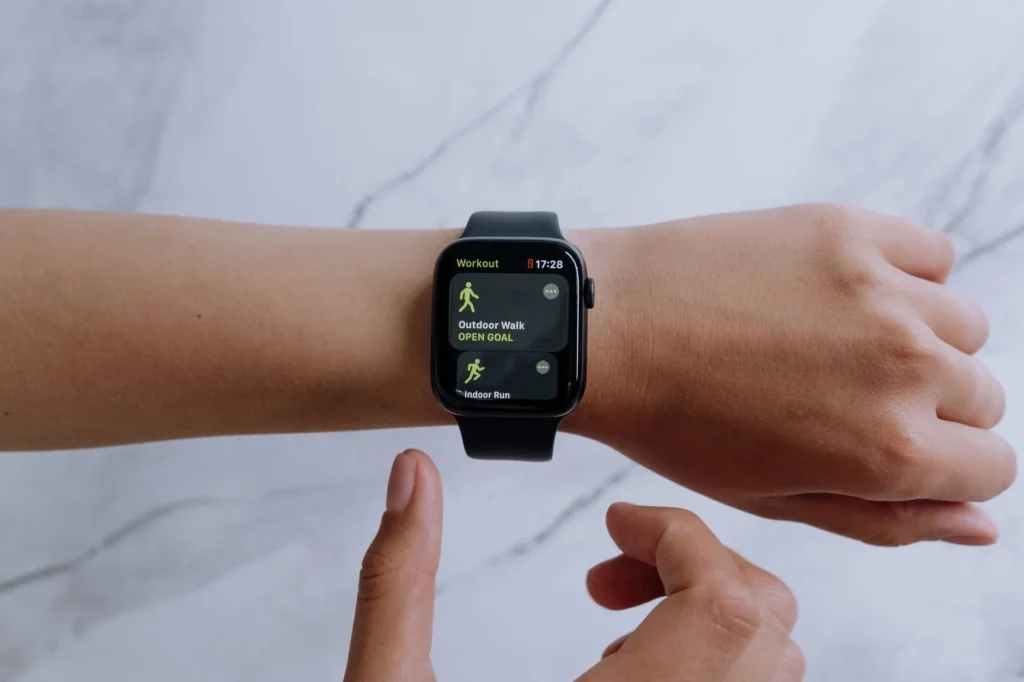
Last updated: June 2026
Apple Watch Move Goal by Age: What to Set at Every Life Stage
Apple’s default Move goal of 300 active calories was designed to be a starting point, not a lifelong target. The problem is that most people leave it unchanged for years, or chase a number that made sense at 25 when they are now 50. Your basal metabolic rate declines by roughly 1–2% per decade after age 30, and muscle mass — which drives how many calories you burn per unit of movement — decreases by 3–8% per decade after 30. These changes mean a 65-year-old and a 30-year-old doing identical activities will register significantly different calorie burns, and their Move goals should reflect that.
Find the Right Move Goal for Your Age and Activity Level
The move goal calculator factors in your age, weight, and current activity level to give you a personalised active calorie target — not a generic 300-calorie default.
What the Apple Watch Move Goal Actually Measures
The Move goal tracks active calories only — the energy you burn through physical movement above your resting state. It does not count your basal metabolic rate (the calories your body burns just to keep you alive). This is an important distinction: a 180 lb adult burns around 1,800–2,000 total calories per day at rest and through basic functions, but their Apple Watch Move goal would typically reflect only 300–600 of those, depending on how much they move.
Active calories include everything from a morning gym session to walking to your car to climbing stairs at work. Apple’s accelerometer and heart rate sensor work together to estimate the energy cost of each movement based on your personal profile — your height, weight, sex, and age, which you enter in the Health app on your iPhone.
How Age Affects Your Move Goal
Apple adjusts what it measures by age group. For children aged 12 and under, the Fitness app shows active minutes rather than calories, because calorie counting is not developmentally appropriate for that age group. For everyone 13 and older, the Move ring shows active calories.
Beyond what is displayed, age shapes how many active calories you realistically burn per day — and therefore what a meaningful but achievable Move goal looks like. Three mechanisms drive this:
- Declining BMR: Resting metabolic rate decreases with age, which means the absolute calorie expenditure from the same physical activity decreases too
- Reduced muscle mass: Muscle burns roughly three times more calories than fat at rest and significantly more during movement; age-related muscle loss (sarcopenia) reduces your calorie-burning capacity
- Lower recovery tolerance: Older adults typically need more recovery time between intense activity, making very high daily targets unsustainable
Recommended Move Goal by Age and Activity Level
The table below uses Apple’s own recommendation framework (which suggests 150–400 active calories depending on age) combined with exercise science data to give age-banded targets across activity levels:
| Age Group | Sedentary (desk job, little movement) | Lightly Active (1–3 workouts/week) | Moderately-Highly Active (4+ workouts/week) |
|---|---|---|---|
| 18–29 | 300–380 kcal | 420–550 kcal | 600–900 kcal |
| 30–49 | 280–350 kcal | 380–520 kcal | 550–800 kcal |
| 50–64 | 250–320 kcal | 340–480 kcal | 480–700 kcal |
| 65+ | 200–280 kcal | 300–420 kcal | 400–580 kcal |
These ranges assume you want a Move goal you can close consistently — not an aspirational ceiling. The right target produces a light challenge on normal days and is closable without extraordinary effort on less active days. If you are missing your goal 4 or more days per week, it is set too high for your current lifestyle.
Why Apple Sets 300 Calories as the Default
Apple’s 300-calorie starting point sits near the bottom of the active range for most adults — it is intentionally achievable for a wide population so that new users experience early success. Research on behaviour change shows that missing a goal in the first weeks dramatically reduces long-term adherence, so Apple errs toward a lower default rather than an ambitious one.
Every Monday, Apple Watch gives you a summary of the previous week and suggests a new goal based on your performance. If you consistently exceeded your target, it will suggest an increase. If you struggled, it may suggest staying flat. The weekly prompt is useful for gradual progression, but it does not account for age — it simply extrapolates from recent activity. This is why using the age-based table above is a better starting framework than blindly following Apple’s weekly suggestions.
The Risk of Setting Your Move Goal Too High
Many users push their Move goal up continuously through Apple’s weekly prompts until it becomes impossible to sustain. A 60-year-old who was briefly very active on holiday might have a 700-calorie goal that is completely unrealistic for their normal working week. The result: they miss the ring repeatedly, get discouraged, and stop engaging with the Activity app entirely.
Gym operator and coach guidance consistently points to the same principle: a goal you hit 5 out of 7 days is better than a goal you hit 1 out of 7 days, even if the former is numerically lower. Consistent ring closure builds the habit loop that produces long-term activity increases. Setting your Move goal based on your age-appropriate range — and starting conservatively within that range — gives the habit loop a chance to form.
Body Weight and Body Composition Also Matter
Age is one variable in your Move goal calculation, but body weight significantly amplifies or reduces calorie burn at every age. A heavier individual burns more active calories performing the same activity as a lighter individual, because more energy is required to move a larger mass. Two 40-year-olds with very different body weights will have different realistic Move goals even if they have identical activity levels.
For people who are significantly above average weight, the active calories per workout can run 30–50% higher than average, which means a Move goal of 400–500 calories might be easily achievable through a single moderate workout. As weight decreases through exercise and diet, the same activities burn fewer calories — which is why re-evaluating your Move goal every few months makes sense as your body composition changes.
How to Adjust Your Move Goal on Apple Watch
To change your Move goal: open the Activity app on your Apple Watch, scroll to the Move ring, and tap Change Goals. Select whether you want to change the goal just for today or set a new daily goal, then use the + and − buttons to adjust the calorie target. Tap Set to confirm.
On iPhone: open the Fitness app, tap your profile photo in the top right, then tap Change Move Goal. Adjust with the + and − buttons and confirm. With watchOS 7 and later, you can also schedule different Move goals by day of the week — useful if your Monday gym session produces very different calorie burns than a Saturday rest day.
Get Your Age-Appropriate Move Goal
Skip the 300-calorie default. The move goal calculator uses your age, weight, and current activity level to give you an evidence-based target that is genuinely achievable — and genuinely challenging.