Last updated: October 2026
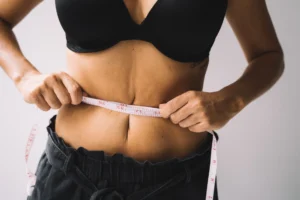
Building muscle and losing fat simultaneously is possible — it’s called body recomposition. The process is not magic: it requires consistent strength training, adequate protein, modest calorie management, and sleep. Here’s the step-by-step approach that works.
Get Your Body Recomposition Targets
Calculate your personalized calorie, protein, and deficit targets for building muscle while losing fat.
Step 1: Eat More Protein
Protein is the non-negotiable foundation of building muscle while losing fat. It serves two critical functions simultaneously:
- Muscle building: Protein provides the amino acids (especially leucine) that trigger muscle protein synthesis — the cellular process of building new muscle tissue
- Muscle protection: In a calorie deficit, your body will break down muscle for energy unless protein intake is high enough to maintain positive nitrogen balance
How much protein to eat
For body recomposition, research consistently points to approximately 0.7–1g of protein per pound of body weight (1.6–2.2g/kg). Studies on successful recomposition protocols — including a 2018 study (Campbell et al., co-authored by Brad Schoenfeld) finding that aspiring female physique athletes eating about 2.5g/kg (~1.1g/lb) of protein gained more lean mass and lost fat compared with a low-protein group [1] — use protein intakes in this range.
Best protein sources for recomposition
- Chicken breast, turkey breast
- Eggs and egg whites
- Fish (salmon, cod, tuna, sardines)
- Low-fat dairy (Greek yogurt, cottage cheese)
- Lean beef
- Plant-based: tofu, tempeh, lentils, legumes
Protein timing
Distribute protein evenly across all meals rather than concentrating it in one or two. Muscle protein synthesis is maximized when protein is consumed multiple times throughout the day. Include 20–40g protein at breakfast, lunch, and dinner, plus consume 20–40g protein within a couple of hours after resistance training.
Step 2: Strength Train with Progressive Overload
Resistance training is the irreplaceable stimulus that tells your body to build muscle instead of just losing weight. Without it, a calorie deficit produces fat AND muscle loss — not recomposition.
Minimum effective dose
- General guidelines: ≥2 resistance training sessions per week
- For body recomposition: ≥3 sessions per week produces better results
- 4 sessions per week (upper/lower split) is optimal for most people
Progressive overload is critical
Muscles only grow when given a reason to. Progressive overload — gradually increasing the challenge over time — is the mechanism that drives continuous muscle adaptation. Apply it by:
- Adding weight to the bar when you complete all prescribed reps
- Increasing rep count with the same weight
- Adding sets over time
- Reducing rest time between sets
Load matters
Both heavy and lighter loads build similar amounts of muscle when sets are taken close to failure, but heavier loads build more maximal strength [2]. A mix of heavy compound work and moderate-rep accessory work covers both.
Exercise selection
Focus on compound movements that recruit multiple muscle groups simultaneously:
- Lower body: squats, deadlifts, Romanian deadlifts, Bulgarian split squats, leg press
- Upper body push: bench press, overhead press, dips, push-ups
- Upper body pull: rows, pull-ups, lat pulldowns, face pulls
Compound lifts allow the greatest overload and recruit the most total muscle mass per exercise. Add isolation exercises (curls, tricep pushdowns, lateral raises) as supplementary work after compound movements.
Related Reading
Step 3: Manage Your Calories (Modestly)
To lose fat, you need a calorie deficit. But the deficit must be modest enough that muscle growth remains possible:
- Target deficit: 200–500 calories below maintenance
- Target weight loss rate: Maximum 0.5–0.7% of body weight per week
- Example: A 180 lb person should lose no more than 0.9–1.3 lbs per week to preserve muscle-building potential
Research by Garthe et al. (2011) [3] found that elite athletes losing at the slower rate (0.7% body weight/week) gained 2.1% lean body mass over 9 weeks, while those losing faster gained no lean mass. The calorie deficit for the muscle-gaining group was approximately 19–20% below maintenance.
Carb cycling for enhanced results
A practical approach: eat slightly more calories (particularly from carbohydrates) on your heaviest training days to fuel performance and muscle synthesis. Reduce calories on lighter days or rest days to create the overall weekly deficit. This provides the fuel needed for intense training while maintaining fat-loss momentum.
Step 4: Prioritize Sleep
Sleep is where muscle is built and fat is metabolized. Inadequate sleep independently sabotages both sides of body recomposition:
- Growth hormone, which supports tissue repair, is released in its largest pulses during deep sleep
- Sleep restriction to 5 hours a night reduced testosterone by 10–15% after just one week [4] (study on young men)
- Poor sleep raises cortisol levels, promoting fat storage particularly around the abdomen
- Sleep-deprived individuals in a calorie deficit lose significantly more muscle and less fat than those sleeping adequately
- Insufficient sleep increases ghrelin (hunger hormone) and reduces leptin (satiety hormone) — making dietary adherence much harder
Target 7–9 hours of quality sleep every night. This is non-negotiable for body recomposition. No training program or nutrition plan fully compensates for chronic sleep deprivation.
Step 5: Add Strategic Cardio
Cardio accelerates fat loss by increasing total energy expenditure. But too much cardio interferes with recovery from resistance training — prioritize weights first, then add cardio.
HIIT (High-Intensity Interval Training) is a time-efficient option for body recomposition:
- Produces similar fat loss to steady-state cardio in less time
- Short sessions leave more recovery for lifting than long steady-state sessions
- Adds a small post-exercise “afterburn” (EPOC), though this contributes relatively few extra calories
- Target: 2–3 sessions per week, 20–30 minutes each
What to Expect: Timeline and Results
| Timeframe | What You’ll Notice |
|---|---|
| Weeks 1–4 | Energy improvement, strength increases, scale may not move or moves slightly |
| Weeks 4–8 | Visible changes in muscle definition, clothes fitting differently, strength continues up |
| Weeks 8–16 | Meaningful body composition changes, measurable fat loss with maintained or increased muscle |
| 6+ months | Significant physique transformation with consistent application |
Don’t expect the scale to cooperate. If you lose 5 lbs of fat and gain 4 lbs of muscle, the scale shows only 1 lb lost — but your body composition has completely changed. Track measurements, photos, and gym performance, not just weight.
Frequently Asked Questions
How quickly can you build muscle and lose fat at the same time?
Most people begin seeing visible results within 8–12 weeks of consistent effort. A realistic expectation for beginner-intermediate trainees is 1–2 lbs of fat loss per month alongside 0.5–1 lb of muscle gain per month. These changes compound significantly over 6–12 months.
Does cardio prevent muscle gain?
Excessive cardio can interfere with muscle adaptation by competing for recovery resources. 2–3 HIIT sessions per week (20–30 minutes each) is the sweet spot — enough to contribute meaningfully to fat loss without significantly impeding muscle growth from resistance training.
Get Your Recomposition Numbers
Calculate your personalized targets for protein, calories, and deficit to optimize building muscle while losing fat.
Sources: [1] Campbell BI, et al. Effects of high versus low protein intake on body composition and maximal strength in aspiring female physique athletes engaging in an 8-week resistance training program. Int J Sport Nutr Exerc Metab. 2018. [2] Schoenfeld BJ, et al. Strength and hypertrophy adaptations between low- vs. high-load resistance training: a systematic review and meta-analysis. J Strength Cond Res. 2017. [3] Garthe I, et al. Effect of two different weight-loss rates on body composition and strength and power-related performance in elite athletes. Int J Sport Nutr Exerc Metab. 2011. [4] Leproult R, Van Cauter E. Effect of 1 week of sleep restriction on testosterone levels in young healthy men. JAMA. 2011.