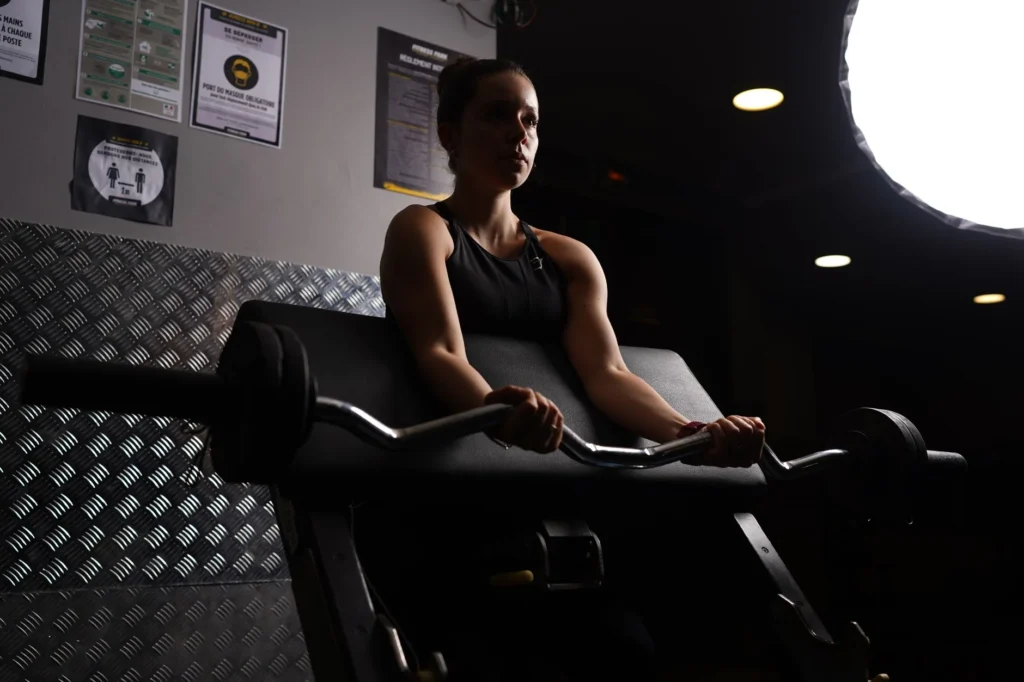
The right weight to lift is one that makes your target rep range genuinely challenging. By the last 2–3 reps of each set, the effort should be high — but not so high that form breaks down or you can’t complete the set. This threshold is different for every exercise, every lifter, and every training goal.
Below is a systematic way to find your working weight, set it according to your goal, and know when it’s time to increase it.
The Core Principle: Progressive Overload
Progressive overload is the requirement to increase training stress over time for adaptation to continue. Your muscles adapt to a given load within a few weeks. Once adapted, that same stimulus produces less response — you need more weight, more reps, or more sets to keep driving progress.
This means the “right weight” is not a fixed number. It changes as you get stronger. A weight that challenged you 8 weeks ago is not challenging enough today. The question isn’t just “how much should I lift?” — it’s “how much should I lift now, and what’s my plan for lifting more?”
How to Find Your Working Weight
For any new exercise, use this process:
- Start lighter than you think you need to. For a 3×10 workout, choose a weight where the first set feels moderate — not easy, but clearly manageable. Reps 7–10 should feel like work.
- Check your last few reps of the last set. By the third set, you should be working hard to complete the final 2–3 reps. If you finish easily, the weight is too light. If you can’t complete the set with good form, it’s too heavy.
- Adjust at the next session. If the weight was too easy, add 5–10 lb for lower-body lifts or 2.5–5 lb for upper-body lifts. If you couldn’t complete all reps with good form, stay at the same weight until you can.
This process typically settles in 2–3 sessions. Don’t spend weeks at a weight that isn’t challenging you — get to a working load and start progressing from there.
Track Your Weekly Training Volume
Once you’ve found your working weights, the next question is how many sets per week you need. The training volume calculator gives you a range based on your experience level and goal.
Use the Training Volume Calculator →How Much to Lift by Goal
| Goal | Rep Range | % of 1RM | Sets | Rest Between Sets |
|---|---|---|---|---|
| Maximal strength | 1–5 | 85–100% | 3–5 | 3–5 min |
| Strength + hypertrophy | 5–8 | 75–85% | 3–4 | 2–3 min |
| Hypertrophy | 8–12 | 67–80% | 3–5 | 90 sec–2 min |
| Muscular endurance | 15–20+ | 50–65% | 2–4 | 45–90 sec |
| General fitness (beginner) | 8–12 | 60–75% | 2–3 | 60–90 sec |
For beginners, the distinction between these zones matters less than learning the movement and progressing consistently. Training in the 8–12 rep range at a challenging weight develops both strength and muscle simultaneously — you don’t need to optimize zones in the first year.
Beginner Starting Weights for Major Barbell Lifts
These are general starting points for someone new to barbell training. Adjust based on what you observe in your first 2–3 sessions:
| Lift | Men | Women | Notes |
|---|---|---|---|
| Barbell Back Squat | Empty bar to 95 lb | Empty bar to 45 lb | Prioritize depth and technique over load |
| Barbell Bench Press | Empty bar to 75 lb | Empty bar to 45 lb | Full range of motion — bar must touch chest |
| Barbell Deadlift | 95–135 lb | 65–95 lb | Starts heavier than other lifts even for beginners |
| Overhead Press | Empty bar to 65 lb | Empty bar (33 lb) | Many beginners start with just the bar |
| Barbell Row | 65–95 lb | 33–55 lb | Flat back matters more than load here |
The empty 45 lb Olympic barbell is the right starting point for most beginners on squat, bench, and press. It lets you learn the movement without load competing with technique. Most beginners are surprised how challenging the empty bar feels for overhead press and front squat when full range of motion is respected.
When to Increase the Weight
The signal depends on your training stage:
- Beginner (linear progression): When you complete all target reps across all sets — for example, 3×10 with no failed reps and the last set feeling manageable — add weight at the next session. Lower body: add 5 lb. Upper body: add 2.5–5 lb.
- Intermediate: When you consistently complete all reps at the top of your rep range (e.g., 3×12 when your range is 8–12) for two consecutive sessions. Increase weight and drop back to the bottom of the range (8 reps).
- General signal: If the last set feels easy and you had 3+ reps left in reserve, you’re leaving stimulus on the table. Increase the weight.
The rate of increase should be small enough to allow completion of all target reps at the new weight. Jumping too aggressively means you’ll fail reps, break form, or both — neither contributes to progress.
Common Weight Selection Mistakes
- Staying too light for too long: Spending months in the same weight range without progression is the most common way to stall completely. Muscles adapt to a given load within a few weeks. After that, you’re not getting stronger — you’re just maintaining.
- Jumping too heavy too soon: Choosing a weight that breaks down your form teaches poor movement patterns and elevates injury risk. The long-term cost of a form-related injury is far greater than any short-term gain from ego lifting.
- Not distinguishing warm-up from working sets: Warm-up sets prepare your joints and nervous system. Working sets are where adaptation happens. Don’t count warm-up reps toward your training volume or let easy warm-up sets slow down your actual working weight.
- Comparing to others: Absolute numbers are not meaningful comparisons without accounting for bodyweight, training age, and biomechanics. Track your own ratio — your current 1RM relative to your bodyweight — not the number on someone else’s bar.
Frequently Asked Questions
How many reps should a beginner do?
8–12 reps per set is the most practical range for beginners. It develops strength and muscle simultaneously, gives enough repetition to learn movement patterns, and is forgiving of small form errors. Sets of 5 (used in programs like Starting Strength and StrongLifts 5×5) are equally valid — the key is picking a rep range and progressing within it consistently rather than jumping between schemes session to session.
How heavy should I lift to build muscle?
Current evidence shows that muscle growth can occur across a wide load range (30–85% of 1RM) as long as sets are taken close to failure. Practically, 67–80% of your 1RM (roughly 8–15 reps to near-failure) is the most efficient zone for most people — enough mechanical tension to drive hypertrophy, enough reps for volume accumulation, and manageable fatigue. For most beginners, any weight that makes the last 2–3 reps of a set hard will produce muscle growth.
Should I train to failure?
Not on every set, and not at high intensities. For most working sets, stop 1–2 reps before failure (1–2 reps in reserve). This produces similar or better hypertrophy compared to constant failure training with lower accumulated fatigue — meaning you recover faster and can train with higher quality. Occasional sets to failure are fine, especially on isolation exercises at the end of a session.
How do I know if I’m lifting too heavy?
Clear signals: form breaks down within the first few reps, you’re compensating with momentum or other muscle groups, you can’t complete the target reps, or you feel pain during the lift (not normal muscle fatigue). Every rep in a working set should be technically controlled. When technique disappears, the weight has exceeded what’s productive.
Is it better to lift heavy with fewer reps or lighter with more reps?
Both produce strength and muscle when taken close to failure. Heavy and low rep (3–6) is more efficient for maximal strength development. Moderate weight and higher rep (8–15) is more efficient for hypertrophy volume accumulation. Most effective intermediate programs use both zones in the same session: a heavy top set for neural adaptation followed by lighter back-off sets for volume. Choosing only one zone limits long-term progress compared to cycling through both.
Related Reading
How Often Should I Work Out to Build Muscle? →Calculate Your Weekly Training Volume
Found your working weight? The next variable is how many sets per muscle group per week you need for your goal and experience level.
Use the Training Volume Calculator →