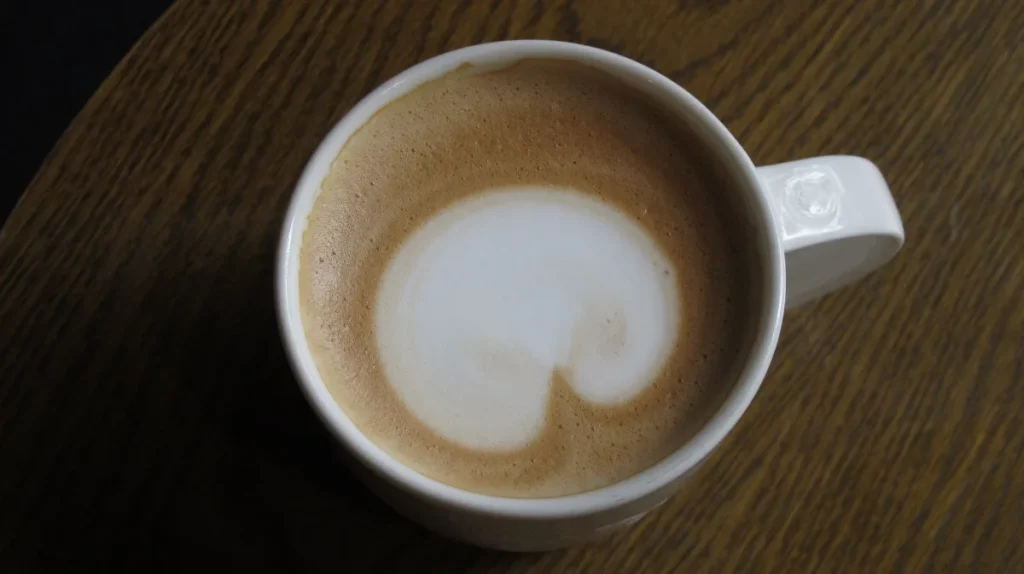
A standard double-shot latte contains approximately 128–150mg of caffeine. The exact number depends on how many espresso shots are in the drink, which varies by size and coffee shop. Here’s the complete breakdown.
See Full Latte Nutrition Including Caffeine
Build your exact Starbucks latte order and see calories, macros, and caffeine content.
Use the Starbucks Macro Calculator →Caffeine in a Latte by Size (Starbucks)
At Starbucks, each espresso shot contains approximately 75mg of caffeine. Standard shot counts by size:
| Size | Espresso Shots | Caffeine | Calories (2% milk, no syrup) |
|---|---|---|---|
| Short (8 oz) | 1 shot | ~75mg | ~100 |
| Tall (12 oz) | 1 shot | ~75mg | ~150 |
| Grande (16 oz) | 2 shots | ~150mg | ~190 |
| Venti hot (20 oz) | 2 shots | ~150mg | ~240 |
| Venti iced (24 oz) | 3 shots | ~225mg | ~280 |
Important note: Iced lattes follow the same shot counts as hot ones (Tall 1, Grande 2), with one exception: the Venti gets an extra shot over the hot Venti — so iced Venti lattes have meaningfully more caffeine than hot Venties of the same size.
Caffeine in a Generic Latte (Not Starbucks)
The average espresso shot at a standard coffee shop contains approximately 63–75mg of caffeine. So for a generic double-shot latte:
- 1 shot latte: ~63–75mg caffeine
- 2 shot latte: ~126–150mg caffeine
- 3 shot latte: ~189–225mg caffeine
The FDA says up to 400mg of caffeine a day is generally not associated with negative effects in healthy adults [1]. Two standard Grande lattes (2 shots each) come to about 300mg; a third would take you past 400mg.
Related Reading
Starbucks Cold Foam Calories: Every Type Ranked →Caffeine in Different Types of Lattes
| Latte Type | Caffeine (Grande / 16oz) | Notes |
|---|---|---|
| Standard Caffe Latte | ~150mg | 2 espresso shots |
| Iced Caffe Latte | ~150mg | Same shots as hot version |
| Vanilla Latte | ~150mg | Syrup doesn’t affect caffeine |
| Caramel Macchiato | ~150mg | 2 shots, caramel drizzle is zero caffeine |
| Pumpkin Spice Latte | ~150mg | Same espresso base |
| Matcha Latte | ~80mg | No espresso — caffeine from matcha powder |
| Chai Latte | ~95mg | Caffeine from tea, not espresso |
| Decaf Latte | ~15–30mg | Decaf espresso still has trace caffeine |
| Half-Caff Latte | ~75mg | One regular + one decaf shot |
The matcha and chai difference: These popular “latte” options at Starbucks don’t contain espresso. A matcha latte’s caffeine comes from matcha powder (~80mg Grande), and a chai latte’s caffeine comes from black tea (~95mg Grande). If you’re tracking caffeine carefully, these are significantly lower than espresso-based lattes.
How Latte Caffeine Compares to Other Drinks
| Drink | Serving Size | Caffeine |
|---|---|---|
| Grande Latte (2 shots) | 16 oz | ~150mg |
| Drip/brewed coffee | 16 oz | ~200–300mg |
| Cold Brew | 16 oz | ~200mg |
| Nitro Cold Brew (Grande) | 16 oz | ~280mg |
| Cappuccino (2 shots) | 16 oz | ~150mg |
| Flat White (Grande, 3 ristretto shots, Starbucks) | 16 oz | ~195mg |
| Espresso (single shot) | 1 oz | ~75mg |
| Black tea (Grande) | 16 oz | ~40–70mg |
| Green tea (Grande) | 16 oz | ~25–45mg |
Despite being made with espresso — which is extremely concentrated — a latte actually has less caffeine than a similar-sized drip coffee. This is because a latte uses only 1–2 oz of espresso in 16 oz of total drink, while drip coffee is uniformly caffeinated throughout. More total coffee → more total caffeine.
Related Reading
Lowest Calorie Starbucks Drinks: A Complete Guide →How to Customize Caffeine in Your Latte
You have full control over caffeine when ordering a latte:
- Add a shot: One extra espresso shot adds ~75mg caffeine and only 5 calories — the most efficient caffeine boost available
- Half-caff: In a Grande, ask for one regular shot and one decaf shot — cuts caffeine by approximately 50%
- Decaf: Asks for all shots to be decaf — reduces caffeine to approximately 15–30mg total (not zero, because decaf espresso still contains trace caffeine)
- Size down for less caffeine: A Tall hot latte has only 1 shot (~75mg) versus Grande’s 2 shots (~150mg)
Does Milk Affect Caffeine in a Latte?
The type of milk (dairy or non-dairy) does not change the caffeine content of your latte. Milk dilutes the espresso and affects how quickly you absorb caffeine — fats and proteins slow absorption — but the total milligrams of caffeine remain the same regardless of milk choice. Choosing almond milk instead of 2% milk saves calories but doesn’t reduce caffeine.
Frequently Asked Questions
Is a latte stronger than regular coffee?
No — regular brewed coffee typically has more caffeine than a latte of the same size. A 16oz drip coffee contains 200–300mg caffeine, while a 16oz Grande latte has ~150mg. Espresso is more concentrated per ounce, but a latte contains only 2 oz of espresso in 16 oz total — most of which is milk.
How long does caffeine from a latte last?
Caffeine from a latte is absorbed more slowly than caffeine from black coffee or espresso because the milk fats and proteins slow gastric emptying. Effects typically peak 30–90 minutes after consumption and have a half-life of about 5 hours on average (longer for some people) — meaning roughly half the caffeine is still in your system around 5 hours after drinking.
Can a latte keep you awake?
Yes. A Grande latte contains 150mg of caffeine — enough to cause alertness and potentially disrupt sleep if consumed in the afternoon or evening. General guidance is to avoid caffeine after 2–3pm if you have trouble sleeping, as residual caffeine can still be active in your system at bedtime.
See Full Nutrition for Your Starbucks Latte
Our Starbucks macro calculator shows calories, protein, carbs, fat, and caffeine for any customized latte order.
Calculate My Latte →Related Reading
Starbucks Nutrition Facts: Calories, Macros, and What to Know →Related Reading
Starbucks Food Calories: Every Menu Item Ranked →Sources: [1] U.S. Food and Drug Administration. Spilling the Beans: How Much Caffeine Is Too Much?