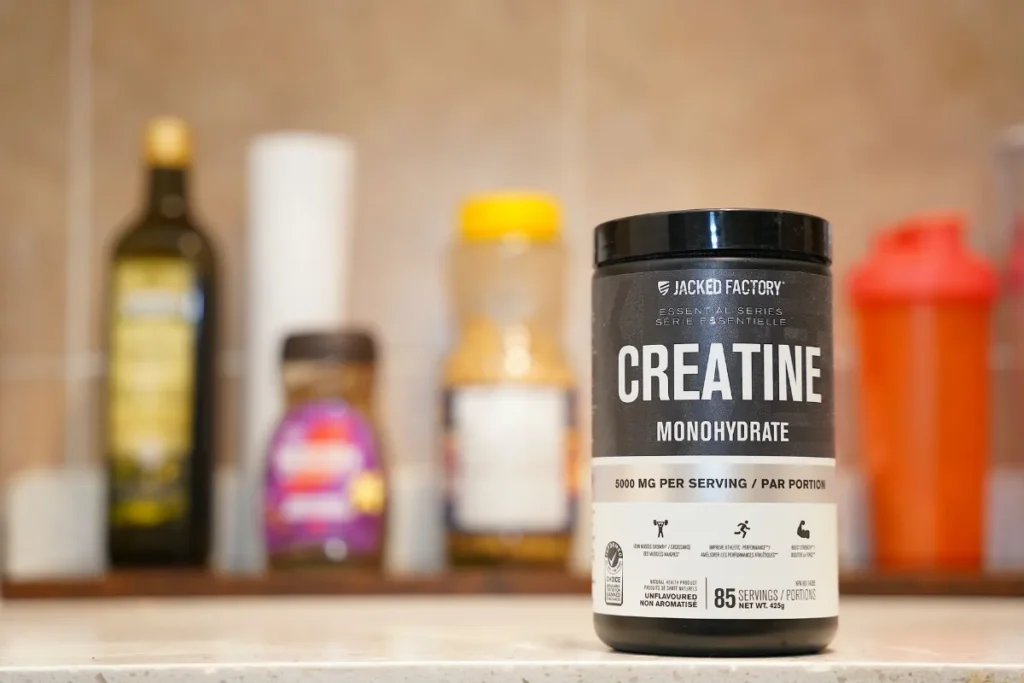
Creatine is one of the most researched supplements in sports nutrition. The dosage guidelines are straightforward, but there are a few variables — body weight, training intensity, loading versus non-loading — that affect what the right amount is for you specifically.
Here’s everything you need to know about creatine dosage, backed by the research.
Get Your Personalized Creatine Dose
Enter your body weight and training details for an exact dosage recommendation.
Use the Creatine Calculator →Standard Maintenance Dosage
The evidence-based maintenance dose is 3–5g of creatine monohydrate per day. This is the amount required to maintain fully saturated muscle creatine stores once they’ve been built up — either through loading or gradual accumulation.
5g is the most studied single dose and the default recommendation for most people. 3g works well for lighter individuals (under ~130 lbs / 60 kg). At 5g daily without loading, your muscles reach full saturation in approximately 3–4 weeks.
The Loading Protocol
Loading saturates your muscles faster — typically within 5–7 days instead of 3–4 weeks.
- Loading dose: 20–25g per day, split into 4–5 equal servings (4–5g per serving)
- Loading duration: 5–7 days
- After loading: Drop to 3–5g per day for maintenance
Splitting the loading dose into multiple smaller servings reduces the risk of GI discomfort. Taking 20g all at once is likely to cause cramping and diarrhea. Four servings of 5g spread through the day achieves the same saturation without those side effects.
Loading is optional. If you’re not in a rush to see results, skipping it and going straight to 3–5g daily is equally effective — it just takes longer to reach full saturation.
Related Reading
How Many Grams of Creatine Per Day? The Evidence-Based Answer →Dosage by Body Weight
Most research uses a flat 3–5g dose regardless of body weight because the saturation threshold doesn’t scale dramatically with size. However, larger, more muscular athletes often benefit from the higher end of the range:
- Under 120 lbs (54 kg): 3g per day
- 120–200 lbs (54–91 kg): 5g per day
- Over 200 lbs (91 kg): 5–8g per day
For a more precise weight-based calculation, use 0.03–0.075g per kg of body weight for daily maintenance.
Related Reading
How Much Creatine to Take for Your Body Weight →Timing: Does It Matter?
Post-exercise timing has a slight edge over other times of day. The increased blood flow to muscles after training may improve creatine uptake slightly. However, consistency matters far more than timing — taking creatine at the same time every day, regardless of when you train, produces better long-term results than inconsistent post-workout dosing.
If you train in the morning, take it after your session. On rest days, take it with a meal. The goal is daily dosing — not perfect timing.
Taking Creatine With Carbohydrates
Research shows that taking creatine alongside carbohydrates significantly improves muscle creatine retention. The mechanism is insulin — carbs spike insulin, which drives creatine into muscle cells more efficiently.
- Taking 5g creatine with 94g of simple carbohydrates increases muscle creatine storage compared to creatine alone
- A smaller combination of 47g carbs + 50g protein achieves a similar effect
In practice, this means taking your creatine with a post-workout shake that contains carbs and protein, or with a carb-containing meal. You don’t need to eat 94g of sugar — any insulin-stimulating meal around the time of supplementation helps.
Which Form of Creatine Is Best?
Creatine monohydrate is the gold standard. It has:
- The most research behind it — hundreds of peer-reviewed studies
- Near 100% bioavailability
- The lowest cost per serving
Newer forms like creatine HCl, buffered creatine (Kre-Alkalyn), and creatine ethyl ester are marketed as superior, but the research doesn’t support the premium pricing. Monohydrate performs as well or better in head-to-head comparisons in every well-controlled study.
Is Creatine Safe for Long-Term Use?
Yes. Creatine monohydrate has been used safely in studies lasting up to 5 years. It does not damage kidneys in healthy individuals. The kidney concern stems from the fact that creatine supplementation raises serum creatinine levels — a standard kidney marker — but this is a direct byproduct of creatine metabolism, not kidney damage. People with pre-existing kidney disease should consult a doctor before supplementing.
Related Reading
How Much Water to Drink on Creatine →Frequently Asked Questions
What happens if you miss a dose?
Don’t double up the next day. Muscle creatine stores remain elevated for weeks even after stopping supplementation entirely — missing a single dose has essentially no effect on your stores. Just resume your normal dose the following day.
Do you need to cycle creatine?
No. Cycling creatine (stopping for a period and restarting) has no research basis. Your body doesn’t down-regulate creatine uptake during continuous use. Consistent daily dosing is the most effective approach.
Can vegetarians take a higher dose?
Vegetarians and vegans have lower baseline muscle creatine stores because they don’t consume meat (the primary dietary source of creatine). They tend to respond more strongly to supplementation. The standard 3–5g dose still applies — the benefit is simply larger, not a reason to take more.
Calculate Your Exact Creatine Dose
Our creatine calculator gives you a personalized loading and maintenance dosage based on your body weight and goals.
Get My Creatine Dosage →