Last updated: June 2026
Weekly Weight Loss Tracker: Why Once a Week Is the Right Frequency
Tracking your weight once a week hits the balance point between too much information and too little. Daily weigh-ins capture noise — water retention, digestive contents, hormonal shifts — that can be demoralising without context. Monthly weigh-ins don’t catch problems early enough to adjust. Weekly tracking gives you consistent, comparable data at a frequency that’s useful without being overwhelming.
The key is running the weekly check-in the same way every time. When you don’t control the variables, week-to-week comparisons become unreliable — and unreliable data leads to wrong conclusions about whether your approach is working.
Track Your Weekly Weigh-Ins
Log your weekly weight and see your trend line over time — the tracker shows your rate of change and progress toward your goal.
Why Weekly Tracking Works Better Than Daily for Most People
Body weight fluctuates by 1–2 kg (2–4 lbs) day to day from normal causes: food and water consumed, hormonal cycles, sleep quality, sodium intake, and digestive contents. None of these fluctuations represent fat gain or fat loss — they’re water and mass movement through the body.
Daily tracking surfaces all of this noise. For people who understand why it happens, daily data can be useful — you can calculate a rolling 7-day average and get a clear signal from the noise. For most people, seeing their weight go up on Tuesday after a good Monday creates unnecessary anxiety and often leads to overcorrecting (cutting calories too aggressively, or skipping a check-in the following day).
Weekly tracking solves this by comparing the same conditions — same day of week, same time of morning, same post-bathroom state — week to week. The 7-day gap is long enough for most water weight fluctuations to resolve, so the comparison is more signal and less noise.
How to Run a Weekly Weigh-In Correctly
The protocol matters more than the specific day you choose. Pick the day and stick to it — the comparison is only valid when the conditions are the same.
Pick the right day. Most people find Monday or Wednesday works best. Monday keeps you accountable through the weekend. Wednesday is mid-week, furthest from weekend eating variation. Avoid Friday and Saturday — these days often follow different eating patterns and produce readings that are hard to compare fairly.
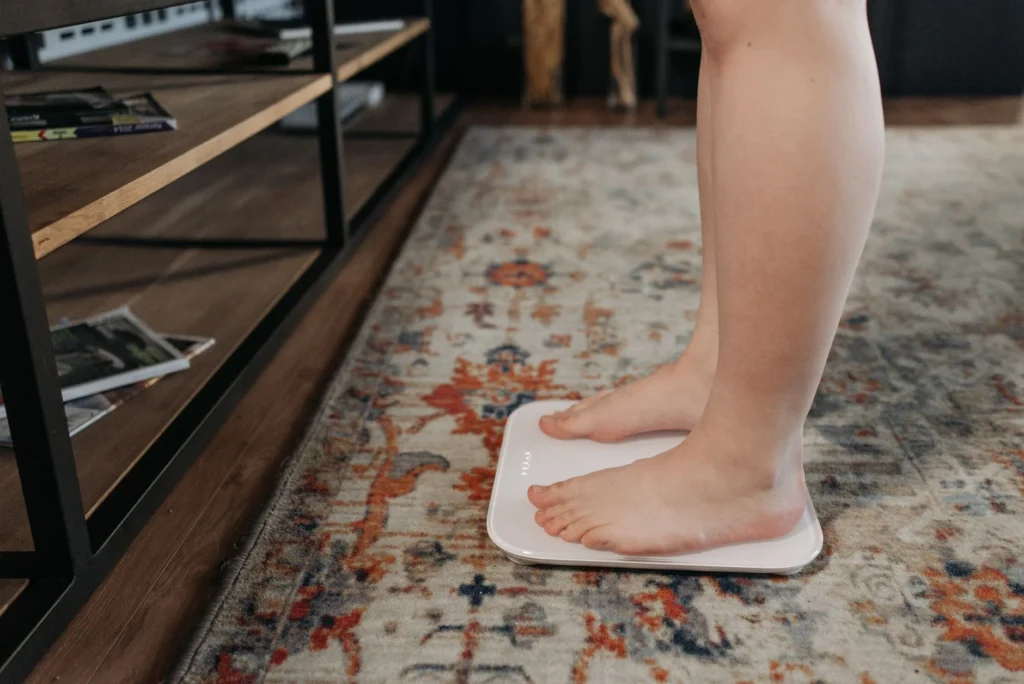
Weigh first thing in the morning. Before eating or drinking anything, after using the bathroom, in the same clothing (or none). Body weight is most consistent at this point — before the day’s eating, drinking, and activity add variables.
Use the same scale on the same surface. Scales vary by several pounds from one to another. Moving your scale between rooms or from carpet to tile changes the reading. Use the same scale in the same spot every week.
Record the number without editing it. Don’t skip recording if the number went up. Up-weeks are part of the data — and they’re often followed by down-weeks as water weight normalises. A missing entry breaks the trend line and removes useful information.
How to Interpret Your Weekly Data
One up-week is not a problem. A single week of weight increase is almost always water retention, not fat gain. Don’t change anything based on one data point — look at the 4-week trend before drawing any conclusions.
Two consecutive up-weeks warrant a review. Two weeks of rising weight suggests something has shifted — possibly calorie creep, a reduction in activity, or a change in how your body is retaining water from a new medication or food. Look at your notes from those weeks before deciding what to adjust.
Three to four weeks of no change is a plateau. A genuine plateau at 3–4 weeks with no downward movement means your calorie balance has equilibrated. Your body has adapted to your current intake and activity level. A small reduction in calories (100–200 kcal/day) or an increase in activity is typically enough to restart progress.
Calculate your weekly average rate. Add up your last 4 weeks of change and divide by 4. This gives your true weekly average, smoothed across the natural variation. A healthy fat loss rate for most people is 0.25–0.75 kg (0.5–1.5 lbs) per week. If your average rate is higher than 1 kg/week over multiple months, you may be losing muscle as well as fat.
| 4-Week Pattern | What It Likely Means | What to Do |
|---|---|---|
| Down, down, down, down | Consistent progress | Keep going; assess if rate is sustainable |
| Down, up, down, down | Normal fluctuation with overall progress | Nothing — this is typical |
| Flat, flat, flat, flat | Plateau | Reduce calories 100–200 kcal or increase activity |
| Up, up, up, down | Delayed response, likely water retention resolving | Review that 3-week period for what changed; one down-week is promising |
| Up, up, up, up | Calorie surplus | Audit food intake; something in the routine has changed |
What to Pair With a Weekly Weigh-In
A weekly weigh-in is more valuable when combined with a second data point that the scale can’t show on its own. The most useful pairings:
Monthly body measurements. Waist, hip, and chest measurements every 4 weeks. These show body composition changes that the scale doesn’t capture — especially important if your training involves building muscle.
Progress photos every 4 weeks. The camera captures changes that are too gradual to notice in the mirror day-to-day. Taken under the same lighting and conditions (same time of day, same clothes or no clothes), photos can be more motivating than any number on the scale.
A consistent food approach during the week of your weigh-in. If you eat significantly differently on weekends — more restaurant meals, more alcohol, more sodium — consider doing your weigh-in mid-week (Wednesday or Thursday) rather than the morning after a typical weekend.
Frequently Asked Questions
Is weekly weigh-in better than daily weigh-in for weight loss?
For most people, yes — weekly tracking removes most of the noise from normal daily fluctuation and makes the trend easier to read. Daily tracking is more useful for people who understand weight variation well and want maximum data for statistical smoothing. If daily fluctuations cause anxiety or behaviour changes, switch to weekly.
My weight went up this week despite being in a deficit. What happened?
Almost certainly water retention. Common causes include: higher sodium intake than usual, more carbohydrates than usual (glycogen storage holds water), poor sleep, increased stress, start of a new exercise programme (muscle damage causes temporary water retention), or hormonal changes. One up-week with no change to your approach is expected. If it continues for 3+ weeks, investigate the pattern.
Should I weigh in more often when starting a new diet?
Only if you can handle interpreting the results without reacting to normal fluctuations. The first 2 weeks of a new approach often show rapid initial loss (mostly water) followed by a stall. This can look alarming if you’re checking daily. If you choose daily weigh-ins in the early phase, calculate a 7-day rolling average rather than comparing individual days.
Log Your Weekly Weigh-In
Record your weekly weight and track your trend over time. The weight tracker shows your rate of loss and progress toward your goal — no setup required.