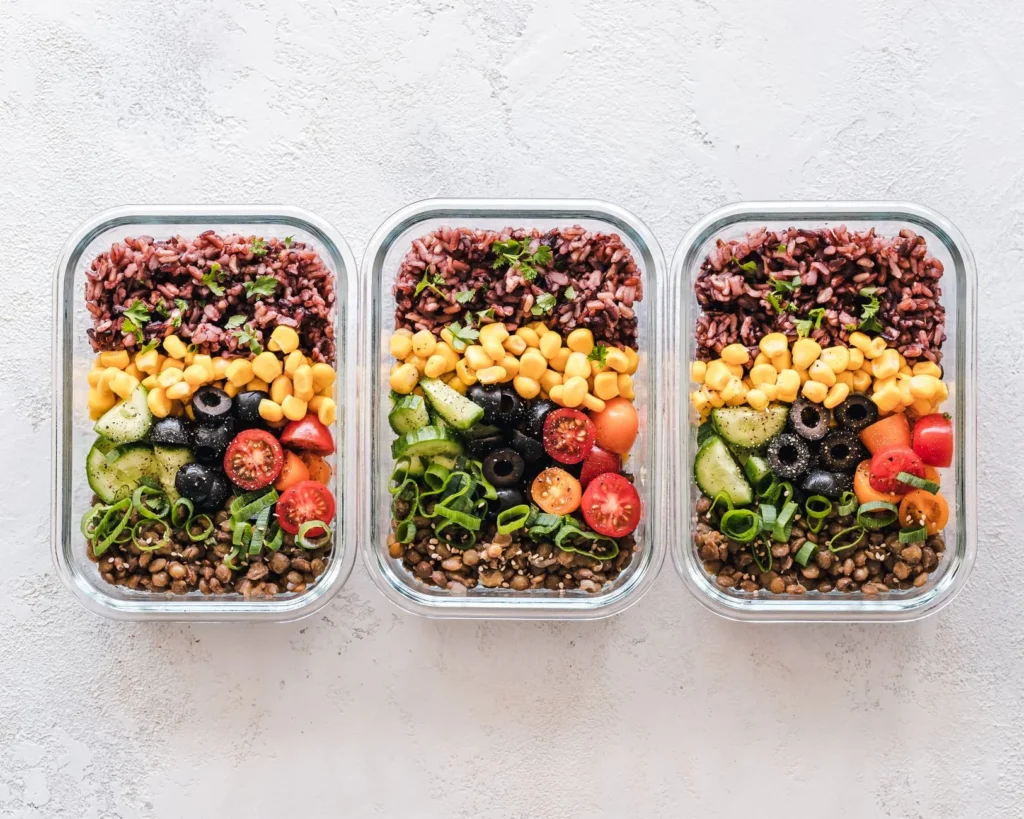
What Is a Meal Plan and How to Build One That Actually Works
A meal plan is a pre-decided schedule of what you’ll eat over a set period — typically a week. It removes the daily decision of what to cook and replaces it with a system that supports your nutritional goals automatically. The difference between people who consistently hit their calorie and macro targets and those who don’t is usually not discipline: it’s whether they planned in advance or made food decisions while hungry.
A good meal plan doesn’t require a dietitian or a subscription service. It requires knowing your calorie target, understanding roughly how to split that across macros, and selecting meals you’ll actually make. This guide covers all three steps.
Generate Your Meal Plan in 60 Seconds
The meal plan generator builds a personalised weekly plan based on your goal, calorie target, and dietary preferences — with a grocery list included.
Generate My Meal Plan →Why Meal Planning Works
Meal planning works for a straightforward reason: it shifts food decisions from reactive to proactive. When you decide what to eat at 6pm while standing in front of an open fridge, convenience wins — and convenience usually means higher calories, lower protein, and less nutritional balance than you intended. Deciding the same thing on Sunday morning, when you’re not hungry and have no time pressure, produces better choices.
The practical benefits stack up:
- Calorie control: Pre-planned meals can be checked against your targets before you cook them, not after.
- Macro accuracy: Hitting a protein target of 150g is nearly impossible without knowing what’s in your meals in advance.
- Reduced food waste: You buy ingredients for specific meals rather than buying aspirationally and throwing away half.
- Time savings: One planning session replaces seven separate daily decisions, plus enables batch cooking.
- Reduced decision fatigue: Fewer food decisions each day means more mental bandwidth for everything else.
Step 1: Set Your Calorie Target
Before selecting any foods, you need a daily calorie target. This depends on your goal:
- Fat loss: A deficit of 300–500 kcal below your total daily energy expenditure (TDEE) produces 0.3–0.5 kg of fat loss per week — a rate that preserves muscle mass for most people.
- Muscle gain: A surplus of 200–400 kcal above TDEE supports lean muscle gain without excessive fat accumulation.
- Maintenance: Eating at TDEE maintains current weight while supporting performance and recovery.
Your TDEE depends on your body weight, height, age, and activity level. A 75 kg moderately active man burns roughly 2,700–3,000 kcal/day. A 60 kg moderately active woman burns roughly 2,000–2,200 kcal/day.
Step 2: Set Your Macro Targets
Macros determine the composition of your calories. For most people with fitness goals, the order of priority is protein → carbohydrates → fat:
| Goal | Protein | Carbohydrates | Fat |
|---|---|---|---|
| Fat loss | 1.8–2.4g per kg body weight | Fill remaining calories after protein and fat | Minimum 0.8–1g per kg |
| Muscle gain | 1.6–2.2g per kg body weight | Fill remaining calories after protein and fat | Minimum 0.8–1g per kg |
| General health | 1.2–1.6g per kg body weight | 45–55% of total calories | 25–35% of total calories |
For most people, protein is the macro to anchor first. Once protein is set (typically 30–40% of calories), fat and carbohydrate targets fill in around it. The exact carb/fat split matters less than calories and protein for most body composition goals.
Step 3: Structure Your Meals
Once you have daily calorie and macro targets, divide them across the number of meals you’ll eat each day. Three meals is a reasonable default for most people. Four to five meals works better for higher calorie targets (2,800+ kcal) or people who prefer smaller portions spread throughout the day.
A simple division:
- Breakfast: 25% of daily calories
- Lunch: 30% of daily calories
- Dinner: 35% of daily calories
- Snack (if needed): 10% of daily calories
Protein should be distributed fairly evenly across meals. Research suggests protein synthesis is maximised when each meal contains 30–40g of protein, rather than front-loading or back-loading.
Step 4: Select Your Foods
Food selection is where most meal plans either succeed or fail. The common mistake is choosing foods that are nutritionally ideal but unenjoyable — which leads to abandoning the plan by Day 3.
A practical selection framework:
- Protein sources: Choose 2–3 protein sources you regularly eat (chicken, eggs, Greek yogurt, tuna, beef, cottage cheese, legumes). These anchor your meals.
- Carbohydrate sources: Choose 2–3 staples (rice, oats, sweet potato, bread, pasta). These are interchangeable based on prep time and preference.
- Vegetables: Include at least one serving per meal. Vegetables are high volume and low calorie — they make meals more filling without significantly affecting macros.
- Fats: Fats often arrive naturally through protein sources (eggs, fatty fish, dairy). Additional fat from olive oil, nuts, or avocado can be added as needed to hit the fat target.
Related Reading
Monthly Meal Planner: How to Plan 4 Weeks of Meals →Step 5: Build Your Weekly Schedule
Map your chosen meals onto the seven days of the week. A few principles that make adherence easier:
Anchor routine meals. Two or three breakfasts and lunches that repeat through the week reduce decision-making and simplify grocery shopping. Variation is primarily in dinner.
Match meal complexity to available time. Monday and Tuesday dinners might be simple (grilled protein + rice + vegetables) because the week is busy. A more complex recipe works better on weekends when there’s more preparation time.
Plan for reuse. If you roast a batch of chicken on Sunday, plan three meals that use it: as the main on Sunday, in a salad on Monday, mixed into a wrap on Tuesday. This reduces prep time and food waste.
Build in flexibility. One meal each week as a wildcard (eating out, leftovers, whatever’s in the fridge) prevents the feeling that the plan is a rigid contract you can’t deviate from.
Related Reading
Personalized Meal Plan: How to Build One Around Your Goals →How Often to Update Your Meal Plan
A meal plan isn’t a permanent document. It should be reviewed:
- Every 4–6 weeks: Check whether your weight is moving as expected. If fat loss has stalled, reduce calories by 100–200 kcal. If muscle gain is happening faster than expected with excessive fat gain, reduce the surplus slightly.
- When your schedule changes: Training frequency, work hours, or cooking access changing all affect what’s practical. The best plan is the one you can actually follow.
- When progress plateaus: The calorie deficit that works for an 80 kg person won’t work for the same person at 73 kg — as body weight decreases, TDEE decreases too.
Frequently Asked Questions
What should a meal plan include?
A complete meal plan includes daily meals (breakfast, lunch, dinner, and snacks if needed) with approximate calorie and protein counts, a corresponding grocery list, and enough variety to stay enjoyable over the planned period. Meal timing is less important than total daily intake for most goals.
How many calories should a meal plan have?
It depends on your goal and body size. Fat loss plans typically run 300–500 kcal below TDEE. Muscle gain plans run 200–400 kcal above TDEE. Maintenance plans match TDEE. These are starting points — adjust based on actual progress every 4–6 weeks.
Do I need to follow a meal plan exactly?
No. A meal plan is a template, not a contract. Missing one meal or swapping a protein source doesn’t derail your progress. What matters is average intake across the week, not perfect daily adherence. Most people find that a 90% adherence rate produces 90%+ of the results of perfect adherence.
Skip the Planning and Generate Your Plan Now
The meal plan generator handles the calorie calculation, macro split, and meal selection automatically — and produces a grocery list alongside your plan.
Generate My Plan →