Not all protein sources are equal. A food can be high in protein but still be calorie-heavy — which matters when you’re trying to hit a protein target without blowing your daily calorie budget. The calorie-to-protein ratio gives you a quick way to evaluate any food’s protein efficiency.
Calculate Your Total Protein Target
Once you know your daily protein goal, the calorie-to-protein ratio helps you choose the right foods to hit it efficiently.
Use the Protein Calculator →The 10:1 Rule
A simple benchmark for evaluating lean protein sources: for every 10 calories in a food, there should be at least 1 gram of protein. This is the 10:1 calorie-to-protein ratio.
To calculate it: divide the total calories per serving by the grams of protein.
- If the result is 10 or less — the food meets the lean protein benchmark
- If the result is above 10 — the food has a poor protein-to-calorie ratio and contributes more calories per gram of protein
Example 1: A chicken breast with 165 calories and 31g of protein → 165 ÷ 31 = 5.3. Well under 10. Strong lean protein source.
Example 2: A ribeye steak with 290 calories and 22g of protein → 290 ÷ 22 = 13.2. Above 10. High protein but also calorie-dense due to fat content.
Example 3: A protein bar with 300 calories and 15g of protein → 300 ÷ 15 = 20. Poor ratio — about 80% of those calories come from fat and carbohydrate (much of it sugar), not protein.
The 30% Protein Rule
An alternative framing: a food or meal has a strong protein profile if 30% or more of its calories come from protein.
To calculate protein percentage:
- Multiply grams of protein by 4 (protein provides 4 calories per gram)
- Divide by total calories per serving
- Multiply by 100 to get a percentage
Example: 25g protein × 4 = 100 calories from protein ÷ 250 total calories = 40% protein. This food passes the 30% rule.
Calorie-to-Protein Ratio for Common Foods
| Food (100g) | Calories | Protein | Cal:Protein Ratio | % Calories from Protein |
|---|---|---|---|---|
| Chicken breast (cooked, skinless) | 165 | 31g | 5.3 | 75% |
| Cod (cooked) | 90 | 20g | 4.5 | 89% |
| Egg whites | 50 | 11g | 4.5 | 88% |
| Nonfat Greek yogurt | 59 | 10g | 5.9 | 68% |
| Shrimp (cooked) | 99 | 20g | 5.0 | 81% |
| Tofu (regular) | 76 | 8g | 9.5 | 42% |
| Eggs (whole) | 143 | 13g | 11.0 | 36% |
| Lentils (cooked) | 116 | 9g | 12.9 | 31% |
| Almonds | 579 | 21g | 27.6 | 14% |
| Ribeye steak | 290 | 22g | 13.2 | 30% |
Whole eggs and lean red meats often sit near the 10:1 threshold because they contain significant fat alongside protein. This doesn’t make them bad foods — fat is an essential macronutrient — but it does mean they contribute more calories per gram of protein than leaner sources.
Using the Ratio for Meals, Not Just Individual Foods
The ratio becomes most useful when applied to complete meals. You can pair a lower-protein food (fruit, vegetables, rice) with a high-protein source and still hit a 30% protein target for the meal overall. The ratio is a planning tool, not a reason to eat only chicken breast and egg whites.
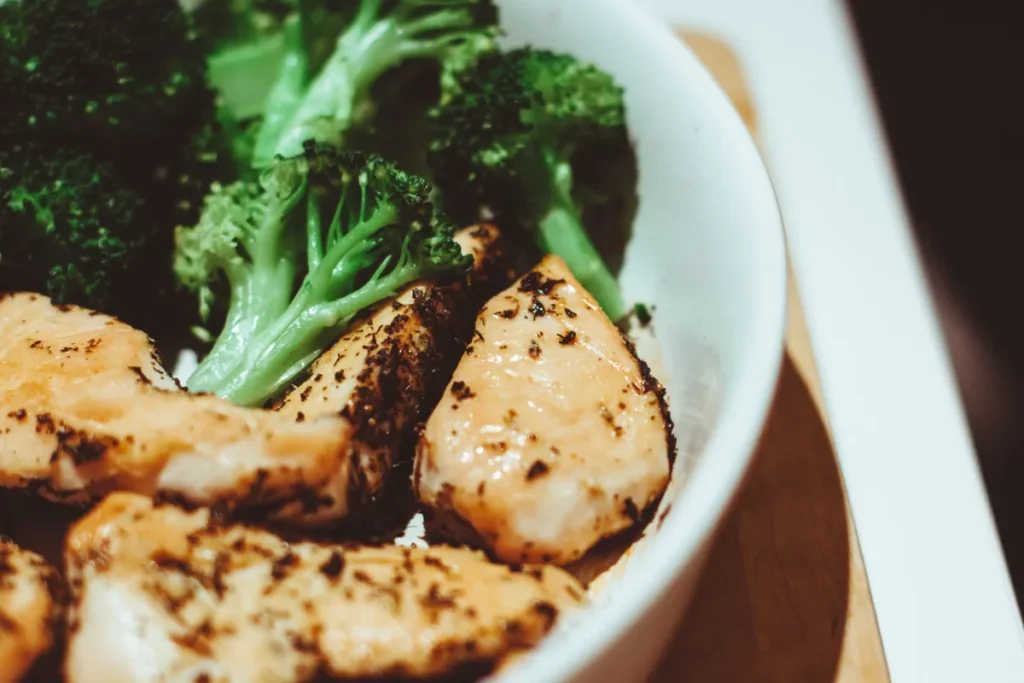
Example meal: 150g chicken breast (46.5g protein, 248 calories) + 100g brown rice (2.7g protein, 123 calories) + 150g broccoli (3.8g protein, 51 calories) = 53g protein, 422 total calories. Protein percentage: 53 × 4 ÷ 422 = 50%. This meal passes the 30% rule easily.
Related Reading
How to Count Macros: A Step-by-Step Beginner’s Guide →What Ratio Should You Target?
Your ideal calorie-to-protein ratio depends on your goal:
- Fat loss: Aim for a meal-level ratio of about 6–10 (roughly 40–65% of calories from protein; to convert, divide 400 by the ratio). Lean proteins help hit protein targets without eating into your calorie budget.
- Muscle gain: A ratio of 8–12 at the meal level is workable. Slightly more calorie-dense protein sources are acceptable when you’re eating in a surplus.
- Maintenance: 10–15 is a reasonable range. No need for aggressive optimization when you’re not in a deficit.
Watch Out for “Protein” Foods With Poor Ratios
Several foods marketed as high-protein have ratios well above 10 due to added fat and sugar:
- Many protein bars: 300–400 calories for 15–20g of protein (ratio: 15–25)
- Peanut butter: 190 calories for 7g protein (ratio: 27) — high in healthy fat but not a lean protein source
- Whole milk: 150 calories for 8g protein (ratio: 18.75)
- Processed meats (sausage, bacon): typically 20–25+ ratio due to fat content
These aren’t foods to avoid — but if you’re trying to maximize protein per calorie, they’re not efficient choices.
Frequently Asked Questions
Is a lower calorie-to-protein ratio always better?
Not necessarily. Very low-ratio foods like egg whites and white fish are extremely lean, but a diet built exclusively around them would be lacking in essential fats, micronutrients, and variety. Use the ratio as a filter for identifying efficient protein sources — not as a mandate to eat only the lowest-ratio foods at every meal.
Does protein powder have a good calorie-to-protein ratio?
Yes — most whey and plant-based protein powders have a ratio of roughly 4.5–5 (about 80–90% of calories from protein), making them among the most protein-efficient options available. This is why they’re useful for bridging gaps in dietary protein without significantly adding to total calorie intake.
Does the calorie-to-protein ratio matter if I’m eating in a surplus?
Less so. During a calorie surplus (bulk), the goal is to hit your protein target rather than minimize calories, so slightly higher-ratio protein sources are fine. The ratio becomes most important when calories are limited and every food choice needs to be efficient.
Find Your Daily Protein Target
Use our protein calculator to get a personalized daily protein goal — then apply the calorie-to-protein ratio to choose foods that help you hit it efficiently.
Calculate My Protein Target →Related Reading
How Much Protein Do You Need to Build Muscle? →